VVM The Visakanv Megaweb The Visakanv Megaweb

Welcome to theVisakanv Megaweb

Since 2008, Visa has been thinking out loud on the internet, sharing his ideas with the world. The result: a quarter-million tweets, more than a thousand essays and blog posts, and hundreds of videos. The Visakanv Megaweb collects all of it, plus the books and media Visa keeps recommending, into one archive, organized so you can find your way through. Pick a place to start.

262K
tweets
1,251
essays & blogs
459
videos

An archive of Twitter postsby Visakan Veerasamy

Visakan Veerasamy (@visakanv) has been posting on X (formerly Twitter) since 2008, racking up more than a quarter-million posts across dozens of topics. The Visakanv Megaweb organizes them into a single archive you can browse without friction. Explore Visa’s most popular posts, favorite themes, and online network via curated lists. Looking for something specific, or want to browse the archive your way? It’s all here: filters for date, length, and more, plus search across text and handles.

262K
tweets
26K+
threads
36
themes

an analysis of power and social dynamics in ‘Mean Girls’

Blog · Status & Social Dynamics · 2016 · 1.9k words

Mean Girls endures because it nails real social dynamics: Cady enters as a blank slate, the Plastics talent-scan her threat level, Regina rules through manipulation and blackmail, and it takes a bus to break the game. A sociological read of high-school hierarchy.

an analysis of power and social dynamics in ‘Mean Girls’

Theory: The movie has such enduring power and is quoted so much because it sheds some incredible light on real sociological phenomena.

It’s compelling because it’s believable. It feels real. It might seem like a show about teenage girls, but it’s as nail-bitingly exciting as Late Night Poker, because it demonstrates decision-making, with stakes.

Let’s dig in.

Our story begins with Cady.

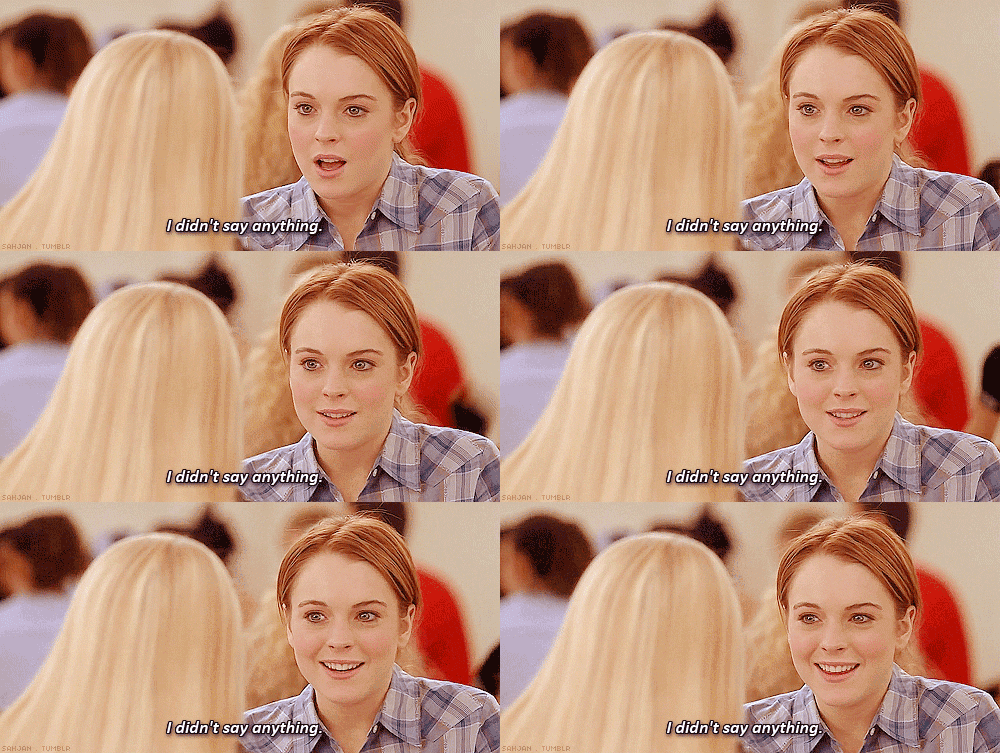
Cady’s been homeschooled her whole life, which makes her a perfect “blank slate” character to explore social reality with. What is “normal” to us is strange and foreign to her.
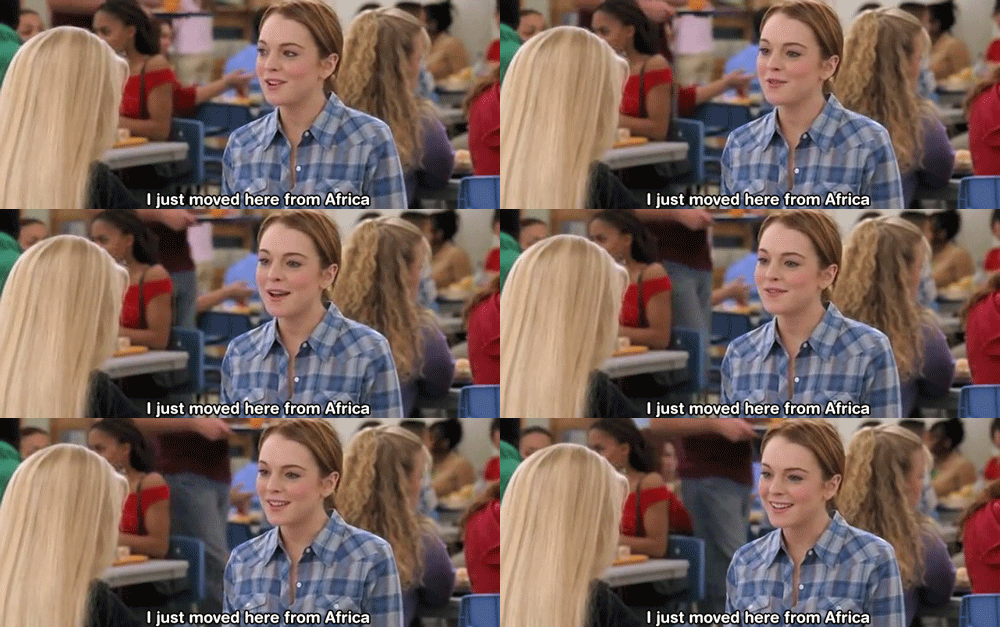
Cady is compelling as a fish out of water.

She has no preconceived notions of how people behave or ought to behave in cliques and groups. She’s “fresh”, almost alien.

We relate to her immediately. We all know what it’s like to be thrust into an environment where we don’t know the rules.

The first thing that happens when she shows up at school is… overwhelming chaos. She’s unable to make sense of the elaborate, cascading complexity that are high-school social relations.

Fish out of water, Alien visits Earth, you name the trope. We all sympathize with a character like this, and more importantly, she allows us to reveal and acknowledge the unique characteristics of our habitat. She’s unaware of all the unspoken rules, and takes appearances to be reality.

“Seeing is believing” is a natural human tendency, and we all know what it’s like to play by one set of rules before discovering that there’s a second, unspoken set of rules that actually govern the game.

Like all newcomers, Cady gets pushed around.

This is standard operating protocol. It happens to the new girl in prison in Orange Is The New Black, it happens to each new employee that shows up in The Office.

What’s actually happening? Jostling for position.

Groups need to sniff new individuals out to see where they ought to stand in the heirarchy. A social group typically has a clearly defined Alpha and Omega, and everything in between is largely illegible.

The alpha group in Mean Girls are the Plastics, while the Omega are Janis and Damien- the suspected lesbian and the fat gay boy. Both relatively unattractive, relatively unremarkable. The Asians, etc are the in-between groups. Insignificant in the grand scheme of things.
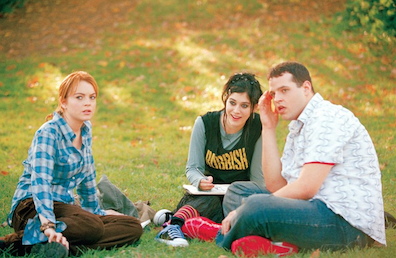
The second likeliest group to take Cady in would’ve been the math nerds.

The Omegas (Janis and Damien) are the likeliest group to take Cady in from the start. They have nothing to fear from her presence, because they have nothing to lose.

The movie could actually have ended here- Cady becomes friends with Janis and Damien and they live happily ever after, hanging out together, mocking the hallowed Plastics from a distance.

The story only progresses into conflict and complexity because Cady is attractive.
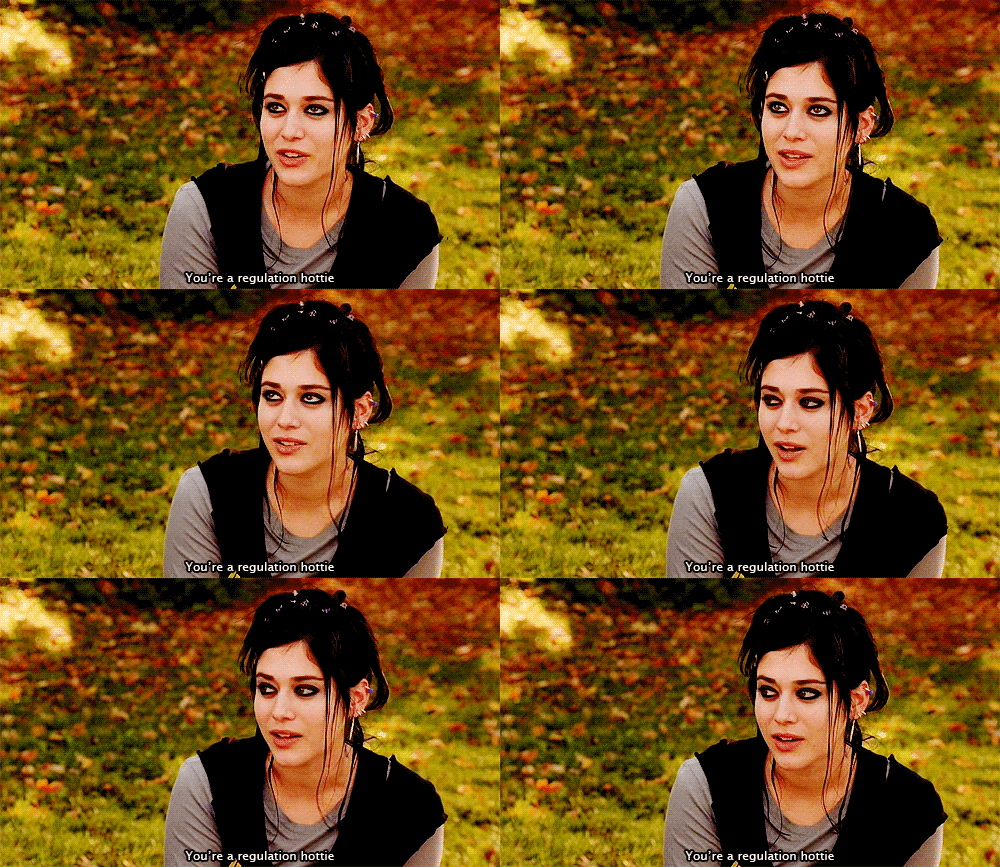
If Cady were unattractive, she would happily join the Math club, stay friends with Janis and Damien, and everything would go happily-ever-after. It would be a sitcom, and probably quite an amusing one.

But…

Cady’s attractiveness makes her a threat to the Plastics.

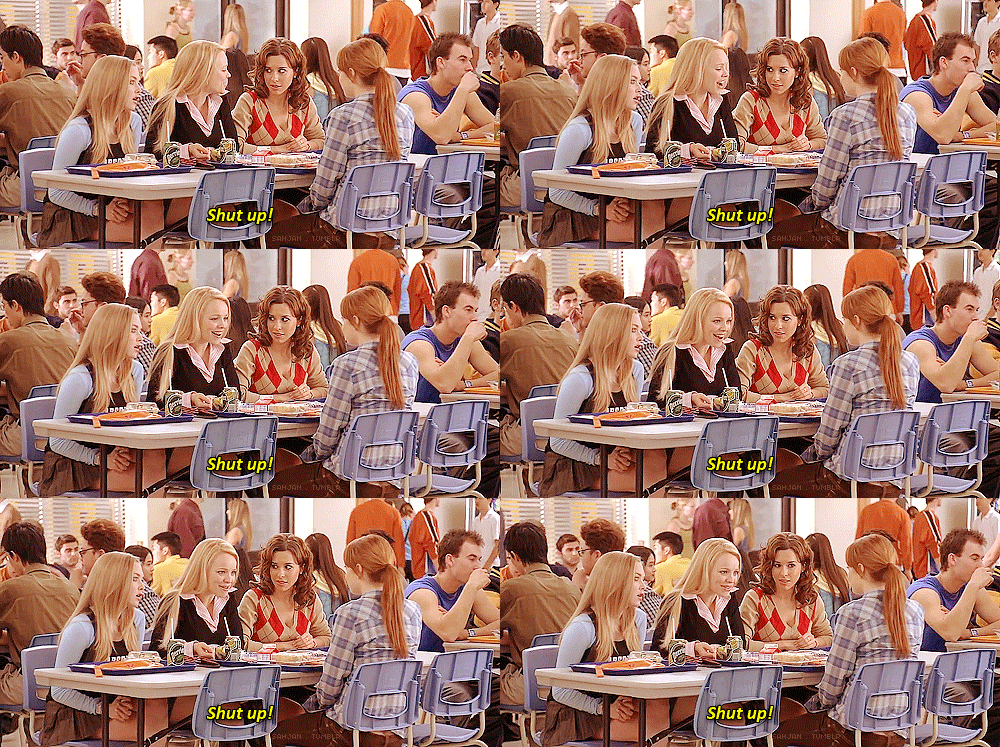
This is absolutely central to the plot. It isn’t a coincidence that the Plastics invited Cady to sit at the table with them. They effectively ‘talent-scouted’ her.
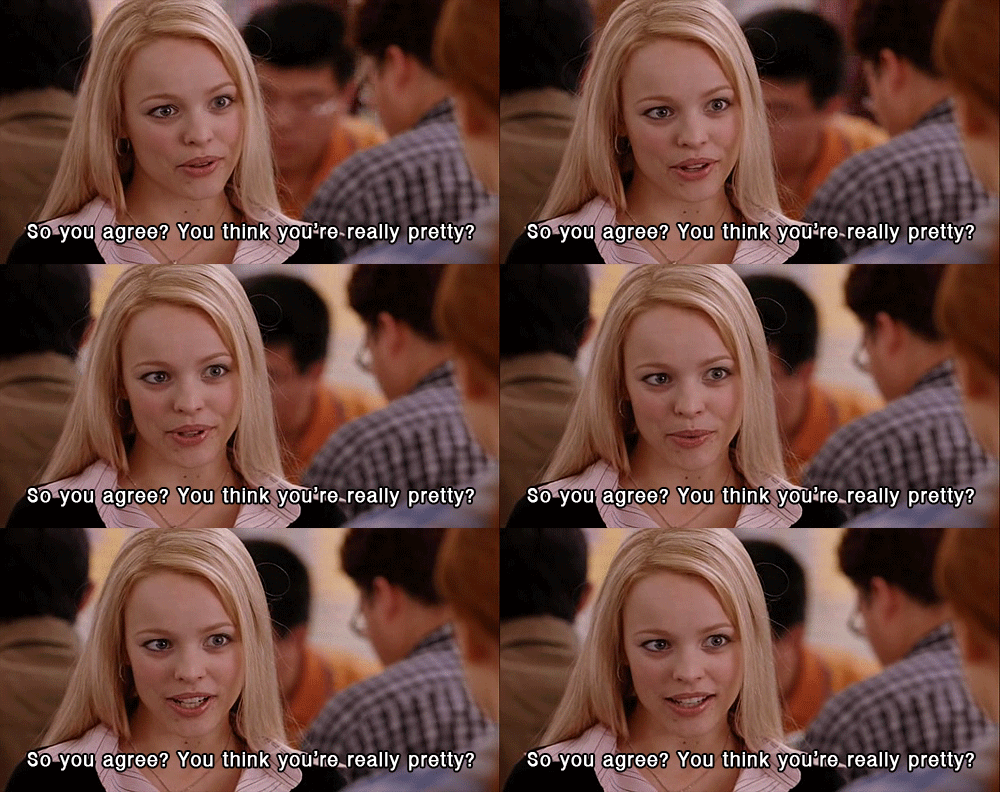
This is a classic Shit Test from Regina. She’s basically trying to suss out exactly how socially intelligent Cady is. Is she cunning like Regina, naive like Gretchen, or plain stupid like Karen?

Regina noticed Cady for the potential threat that she was. If the Plastics subsume her into the group (keep your enemies close!), they can control her.

If she were left as a free agent, she would earn the attention of the attractive boys (Aaron, for instance), and she would threaten the alpha status of Regina and the Plastics. She would delegitimize them.

Alpha groups still have in-group politics.

Cady alludes to this when describing how she found herself desiring Alpha Regina’s approval despite hating her. (This is a very common trope. I’m reminded of the toxic relationship between Cathy and Heathcliff in Wuthering Heights, and well, abusive relationships everywhere. People get drawn to power even if it burns them.)

Gretchen too chooses to be miserable within the Plastics rather than leave it, because the Plastics as a collective are the Alpha group. Better to be the bottom-feeder in the best group than to be outside of it.
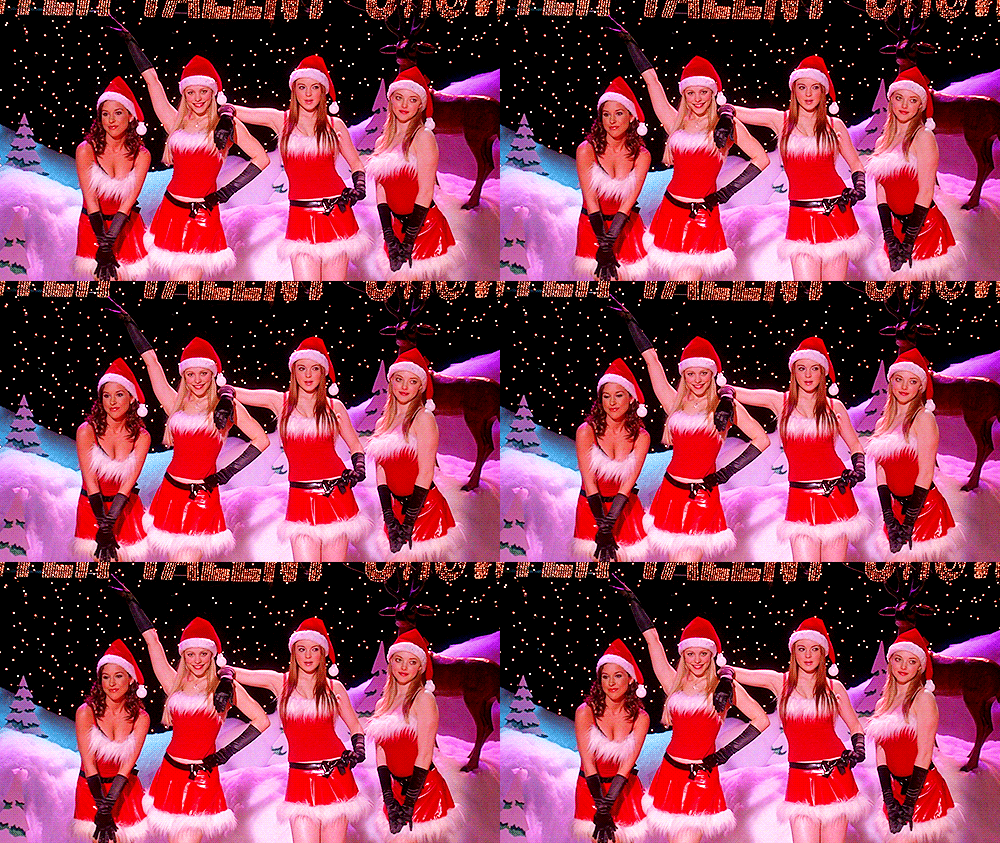
Their sexuality and their attractiveness is their chief source of social currency.

The Plastics maintain their alpha status through attention, by being sexually desired by everybody else. They’re effectively the “tip of the spear”, desired and envied and loathed by everyone.

It’s interesting to study the social dynamics within the Plastics themselves.

Regina is rightfully Queen Bee.

Regina George’s character was partly inspired by Alec Baldwin’s character in Glengarry Glen Ross, a super-alpha, manipulative Wall-Street hotshot.

She’s attractive, and more importantly, she’s the most socially intelligent. That’s what gives her the power to manipulate others so well. She understands people’s fears and insecurities. She’s also rich, and she drives– all of which are assets that she can leverage.

“Walk home, bitches,” she goes, when her clueless followers side with Cady instead of her, and attempt to use her arbitrary rules agains her- rules that she invented to control them and keep them in line.
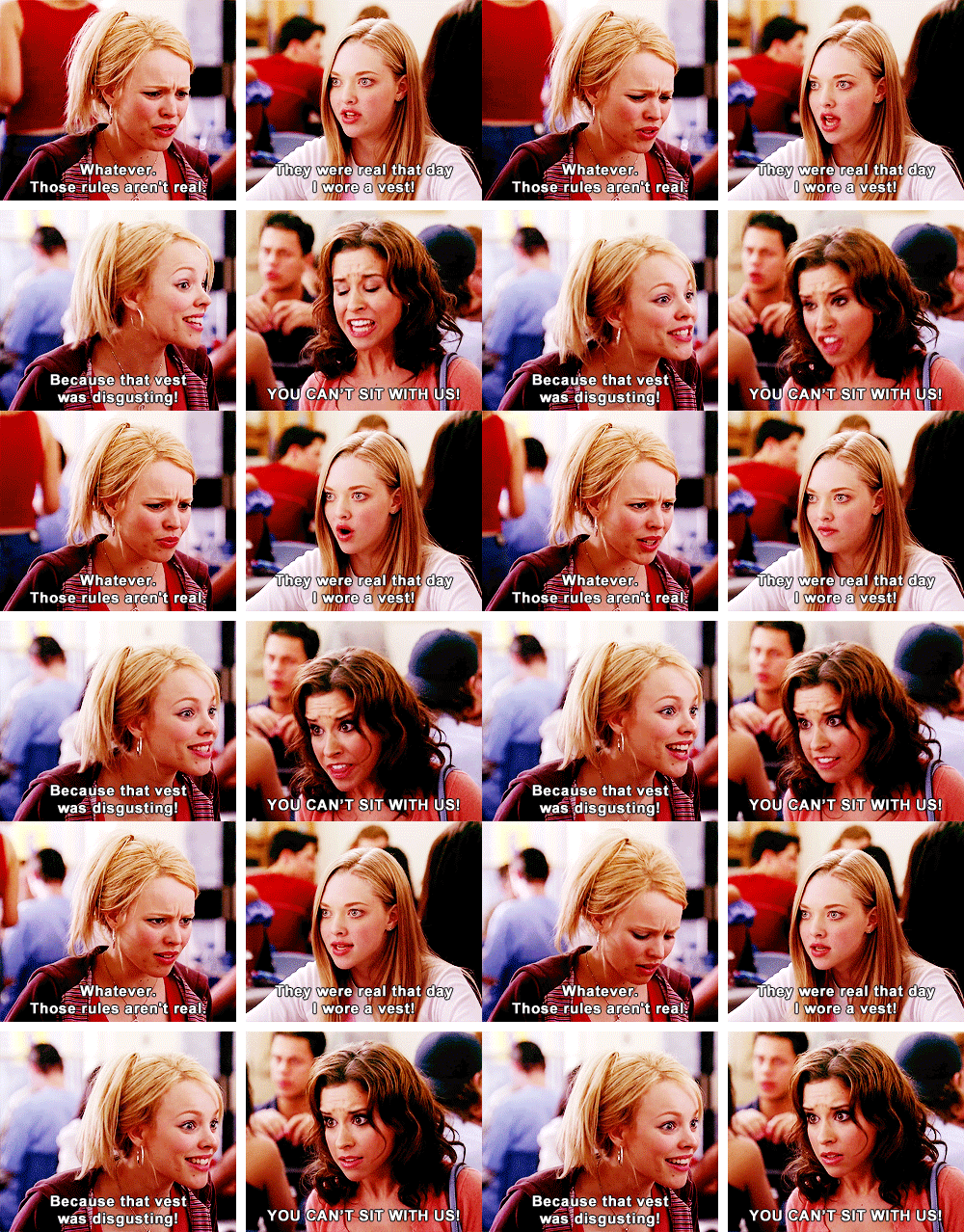
Poor clueless Plastics don’t realize not to fuck with a Sociopath.

She demonstrates her sociopathic intelligence several times, and it’s clear that she derives pleasure from this.

The moment that spoke to me the most was when she phoned Cady with “I know your secret,” and then went on to say “Don’t you hate Gretchen for ratting on you?” while Gretchen was on the phone.

Gretchen was in on this conversation- Regina’s way of keeping all her peons in check by playing them off of each other.
She deliberately plays people off against each other, manipulating them and their insecurities. She lies to Aaron about Cady. I’d go so far as to say that she built the burn book all along as blackmail capital- it’s a Dead Man’s Switch, which she can use as leverage against anybody who contemplates backstabbing her.

Socially manipulative people like Regina “store bullets”.
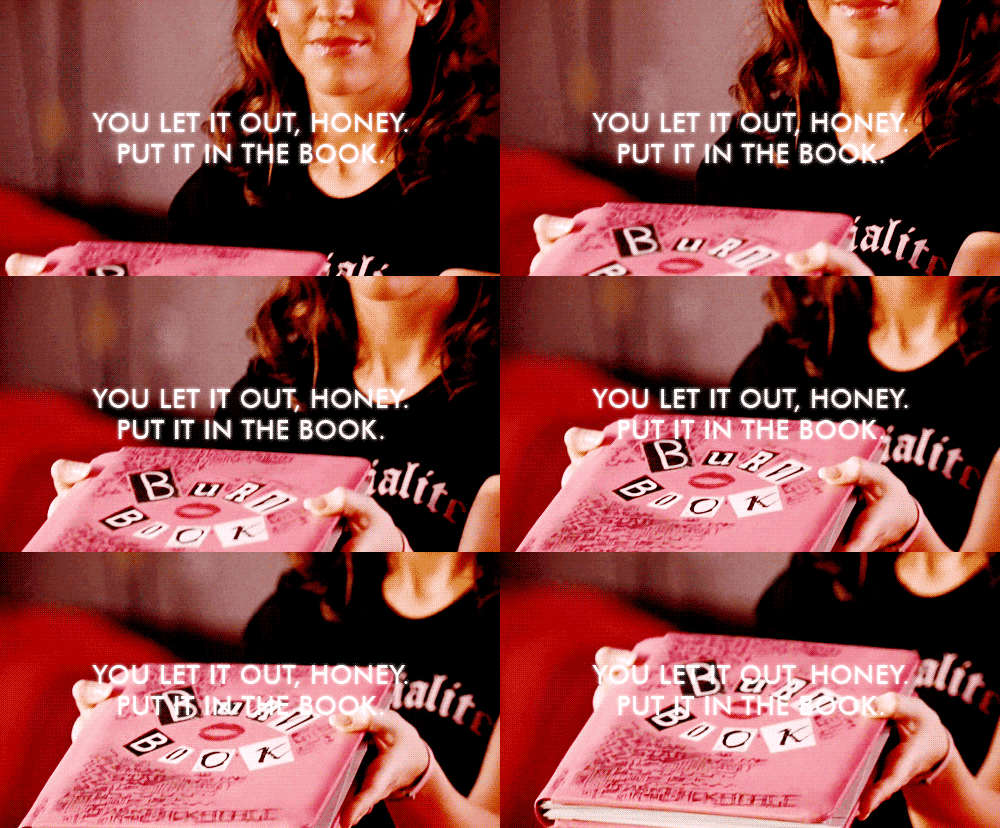
 

Gathering Blackmail Material 101

It’s like Batman keeping kryptonite in case he ever has to kill Superman. They know a lot about everybody, they have superior information- people like Gretchen (clueless) seek Regina’s approval, and freely divulge information to earn that (supeficial) approval.

Notice how insidious Regina is- she got Cady to insult Ms. Sharon in the burn book! All of this is leverage that Regina puts together to shore up her own social capital.

It took a deus ex machina to defeat Regina.

The conflict is resolved by a random act of God- the antagonist gets hit by a bus. and decides not to antagonize anymore.

This is the “near death” trope- when a player experiences significant trauma and decides they don’t want to play anymore. This is a bit of a copout, and probably an artistic choice for the sake of the limitations of the movie.

Think about this- what would’ve happened if Regina didn’t get hit by the bus? Even if Cady decided to “quit the plastic scene”, Cady’s continued existence would threaten Regina’s dominance (as long as Regina cares about her social status). So Regina would have no choice but to decimate Cady altogether. It took a bus to take her out and make her decide that she didn’t want to play.

There’s no defeating people like Regina in a simple face-to-face confrontation.

She has too many assets (her own looks, the attention she gets from boys, and above all, her shrewd understanding of interpersonal relations, people’s insecurities, fears, wants and needs, and all the blackmail content she has).

I suppose maybe Cady could’ve gone the “exile” route and kept to herself and the math kids. That would have been a less satisfactory movie, of course.

Janis (who plays it straight) underestimated Cady.
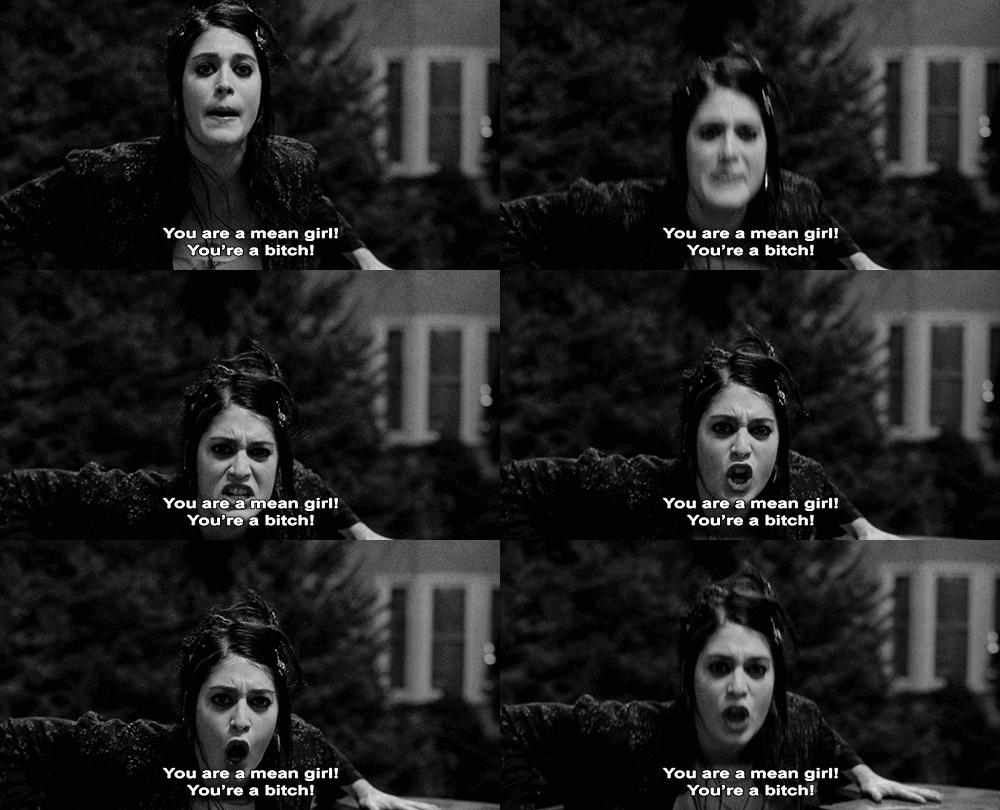
While she had nothing to lose by Cady joining her and Damien, she lost Cady to the Plastics. I think this happens a lot with “genuine” people (clueless) who play their cards straight. We assume that our honesty and straightforwardness will be appreciated.

Unfortunately, social reality can be like poker- there are real stakes involved, and you don’t win by “playing nice”. Well, different people have different interpretations of how the game ought to be played. Janis and Regina have completely opposite interpretations. Janis believes in being a straight-talker, Regina believes in manipulation for pleasure and profit.
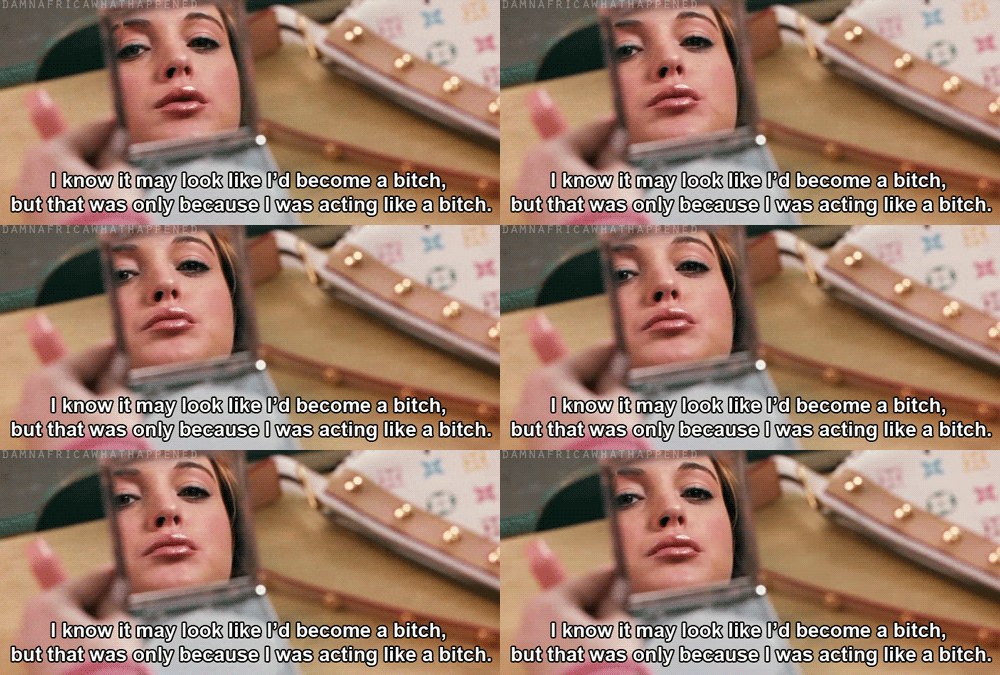
Will she, won’t she?
Cady’s interpretation of how to play the social game changes throughout the movie- that’s her personal development as a character, and that’s what makes the movie so goddamn compelling- she experiences multiple different social realities depending on how she wants to play her hand.

Gretchen and Karen aren’t mean, they’re clueless.

As I revisit quotes of the movie, I realize that both of Regina’s followers are “clueless” (in the Gervais Principle sense). They are eager for recognition, but they have no real idea how social dynamics actually work.
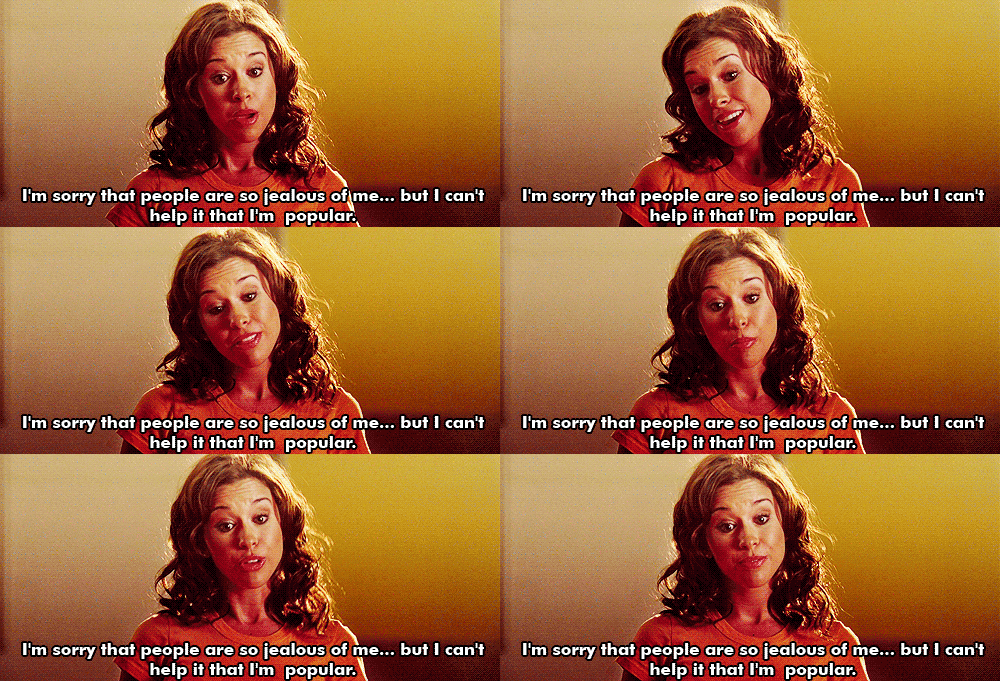
She has no idea how social reality actually works. She’s insulated and used to having Regina to take care of everything for her.
Gretchen isn’t being a showoff when she says “I can’t help it if people like me cause I’m popular”- she’s genuinely ignorant of how she comes across when she says that. That’s Posturetalk, not Powertalk. She gets punished for it- her illusions are shattered.

This ignorance of actual social dynamics explains why they immediately started following Cady around once Regina was out of the picture. Neither of them knows how to actually think for themselves. They’re programmed to follow the leader.
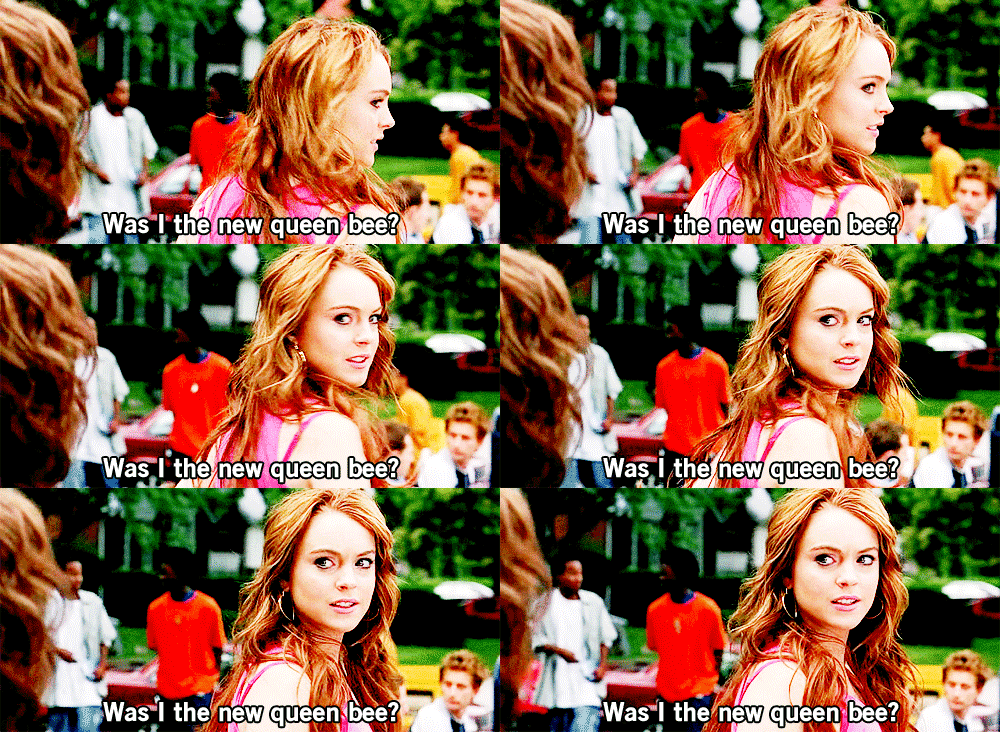
Cady was always too inquisitive, analytical and questioning to be an obedient follower.

Consider how Cady wanted revenge when Regina kissed Aaron. Gretchen and Karen wouldn’t dream of doing that. They would have conceded defeat and yielded to Regina, and perhaps convinced themselves that it was for the best. “You might think you’re attracted to him, but you’re not.”

Kissing Aaron was probably Regina’s way of establishing dominance over Cady.
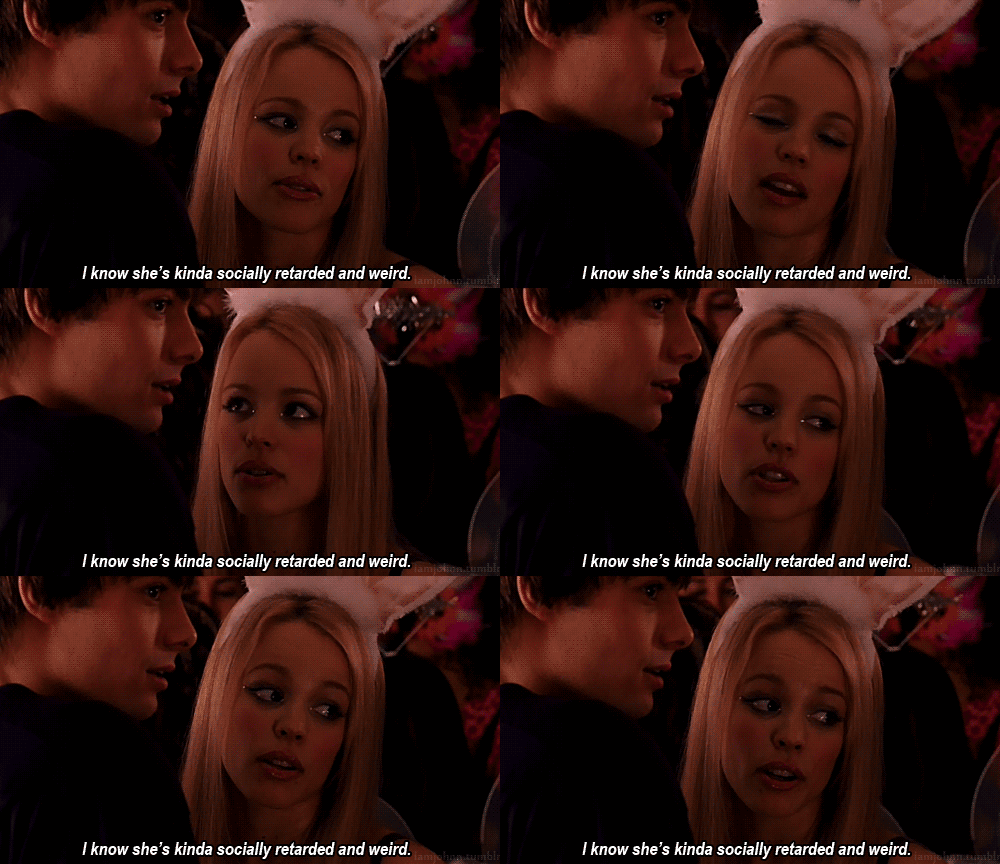
Regina recognizes Cady as a threat, and wants to crush her as quickly and thoroughly as possible. She didn’t anticipate that the homeschooled girl would have the guts to fight back.
I think that’s the simplest and most rational explanation. All Regina really cares about is the pleasure of manipulating others and maintaining her top dog status. She’s used to having followers, and didn’t quite expect Cady to retaliate. (Cady retaliates partially because she has nothing to lose, and perhaps more importantly, she hasn’t been socialized to back down.)

God, what a great bloody film.

Janis is an example of a Gervais “Loser”- a person who’s typically smarter than the Clueless (Gretchen, Karen), but voluntarily chooses not to play the game. She demonstrates her wit and intelligence when she outs Cady to Regina in the gymnasium.

Everybody relates with Losers.

They are the most commonly studied character in sitcoms and films. Most movies are made for Losers like us, which is why they tend to end with The Triumph Of The Loser. We’re supposed to like Janis, and choose to be like her. The straight-talking, mediocre-and-happy, better-than-average average people of the world. Some movies are made celebrating Sociopaths like Regina- see The Wolf Of Wall Street, for example.

If you want to understand Clueless- Gretchen, Karen- watch Michael Scott in The Office. If you want to understand Sociopaths… Regina’s a great example.
Scroll to Top

Originally published at https://www.visakanv.com/blog/mean-girls/.

An archive of books and mediareferenced by Visakan Veerasamy

Visa is a prolific consumer of art and media. Over the years, he has referenced, reviewed, and recommended thousands of books, essays, articles, comics, and videos. The Visakanv Megaweb pulls his collection together in one place. Each item carries a link tracing it back to the mention.

About the Megaweb

The Visakanv Megaweb is a public archive of everything Visakan Veerasamy (@visakanv) has put on the internet: a quarter-million tweets, more than a thousand essays and blog posts, hundreds of videos, and the books and media he points to.

Visa has been thinking out loud online since 2008. The result is one of the largest bodies of personal writing on the web, but until now it has lived in scattered places: threads you unroll by hand, blogs on separate platforms, videos spread across years. The Megaweb pulls all of it into one place you can read and search.

What’s inside

The archive is in four parts. The Twitter Archive holds his posts, threads, replies, and quote-tweets. The Writing Archive collects his essays and blogs across three collections. The Video Archive gathers his vlogs, talks, and readings. The Library is everything he points to: the books, essays, articles, and videos he references in his own work.

How it’s organized

Each part is built to be browsed on its own terms. Read a theme from top to bottom, sort by what is most-loved or most-recent, narrow to replies or originals, or search the text directly. Every item keeps a link back to where it came from.

A note on the data

Counts, excerpts, and rankings are drawn from Visa’s public posts. Sourcing and update cadence are still being finalized.

Writer and internet builder, known online as @visakanv. Here are his books, where to support his work, and where to find him.

His books

FAN Friendly Ambitious NerdOn becoming a kinder, bolder, more curious version of yourself.Gumroad →Goodreads →
INT IntrospectAn inward hero’s journey to earn your own trust and self-respect; a remix of Nietzsche, Emerson, Watts, Campbell, and Jung.Gumroad →Goodreads →
An archive of Visakan Veerasamy’s online work.
Set in Fraunces, Geist, and Geist Mono.
Built by Mars Code Factory.
The Twitter ArchiveBest Tweets

Best Tweets

Many tweets from Visa are popular, but some are more popular than others. Browse the 1,000 most-liked top-level posts in Visa’s Twitter archive.

The Twitter ArchiveBest Threads

Best Threads

Visa is known for megathreading, and has written more than 26,000 threads since 2008. Explore his threads, including the longest and most popular. To page through every one, browse the full list →

The Twitter ArchiveLongest Threads

Longest Threads

Visa's biggest megathreads: his longest unbroken sequences, up to 200+ posts. See the best-loved →

204
tweets in the longest thread
7.3
years, longest-running thread
84
tweets, avg. length

The Twitter ArchiveAll Threads

All Threads

Every thread Visa has written: more than 26,000 since 2008. Search the text, narrow by year or length, and sort however you like. See the 1,000 best-loved →

26,381
threads
2021
peak year
102,048
tweets in threads
Search
Length
Year
Theme
26,422 threads

The Twitter ArchiveAll Tweets

All Tweets

Here is every reply, quote-tweet, thread, and standalone post from Visa’s Twitter archive, more than a quarter-million in all. Retweets aren’t included here. Browse all his retweets →

Search
Type
Theme
Year
251,277 tweets

Themes

Visa’s tweets have common threads and narrative arcs if you look closely. Explore the themes he’s focused on across his years on Twitter, and the tweets in each.

Search
36 themes
The Twitter ArchiveRecurring Posts

Recurring Posts

Visa is known for quoting and resharing his own tweets, often to resurface an insight or reinforce an idea. See every time he’s quoted himself or brought an old post back into a conversation.

34,006
self-quotes
13,033
distinct ideas
339
most resurfaced
Search
Year
Theme
4,874 recurring ideas

Retweets

The accounts and posts Visa amplifies. Not his words, but a record of who and what he has pointed his audience toward over the years. Self-retweets aside, here is everyone he has reshared.

Network

If Twitter is a public town square, Visa is the hyperactive, affable guy who talks to everyone: nearly half his posts (45%) are replies to other people. Below are the 100 accounts he replies to most.

Less a body of work than
a body of conversation

The shape of it

Every post and retweet, sorted not by what it’s about but by what it is.

How the mix shifted

His blend of replies, quotes, posts and retweets as a share of each year. Hover for any year.

Volume over time

Themes

What he posts about most. Toggle to see what actually lands.

His network

The accounts he engages with most. Toggle replies, quote-tweets, or retweets; tap a bar to open the account.

…and the same as a bubble field: the top accounts he replies to and quotes most, sized by how often. Hover or tap a bubble.

Hall of fame

All-time records across the archive.

The record-setting tweets

All of Observations & Humor

Every tweet in Observations & Humor. Search the text or a handle, narrow by date or to replies vs. originals, and sort however you like.

Search
Type
Year
16,834 tweets
reply312 likes2026-05-22
original2.1K likes2026-05-20
reply84 likes2026-05-19

placeholder copy and data · this same page serves any scope (a theme, an account)

Search
Year
Datesto

Your bookmarks