— 1. talismans —
A talisman is simply an object that is meaningful to you. Wedding rings are the most widely appreciated talismans. (One of the most haunting images from the Holocaust – which I won’t post here, but you can look it up – is a big pile of wedding rings taken from victims who were murdered. It’s so terrible precisely because you can feel the weight of all that meaning, consecrated by hundreds of weddings, utterly desecrated.)
You have to periodically recharge your talismans with fresh thoughts and energy or they’ll “decay”, ie become less meaningful over time.
Marie Kondo understands this, which is what I think she’s getting at when she talks about things like “does this spark joy”, and talks about poking and shaking objects to see how they feel.
Everyday is a new opportunity to assign value to things, to decide what is important, what is beautiful, what is good, what is deserving. In this regard you are truly the Monarch of your life, first of your name and so on.
If you do a beautiful job of treating your own life as something sacred, other people who witness you doing it will notice. Not everyone. In fact most people won’t notice. But the small handful of people who notice will increase your power level unlike anything else.
This is one of the things I’m talking about re: aesthetics and vectors. It’s about how you choose to assign value. If you do it artfully, other people will subscribe to it, which gives it more power, more currency. I suppose this is religion/cult-starting 101.
But I’m not trying to start a cult. I’m just trying to be more in tune with my own emotions, my own body, everything that constitutes my life. The funny thing is you can’t hide the glow when you do it right. When you do it right, there is a “charge”, and people are drawn to you.
Everything in your life is a sort of elaborate memory board. spiders use their webs as a form of external cognition. We use *everything*. All our objects are telling us stories. Some of us realize we can inspect and edit those stories, I believe people like us used to be called shamans.
Everything tells a story; the story of modernity is often a story of amnesia.
This $10 piece of costume jewelry is one of the most precious things I have, because it reminds me that some people find me sexy (which is very powerful – it makes me more abundant, more generous, less needy) Of course like Thor’s hammer, it’s a tool, an aid, not the source.
And every talisman is fragile and fleeting, just as existence itself is fragile and fleeting.
I’ve only recently begun to learn how to play this game with objects – but I have a wealth of experience playing with words.
What is sacred in your life? What is valuable to you, what is beautiful, what is true, right, good? And what are you doing in service of it?
— 2. attention sovereignty —
Sometimes a phrase comes up for me that’s sticky and memorable, that doesn’t seem to be used much by others, and so I create a post like this one to flag it. (Flag your catchphrases.)
Attention sovereignty is the idea of being the primary director of your own attention.
Thread: My sense is that attention sovereignty is the root of all other sovereignty.
attention sovereignty is a prerequisite for behavior sovereignty, context sovereignty, et cetera.
We can’t influence what we do not notice, and we will be influenced by what we do notice. So it’s worth being very careful about what we do choose to notice, what we attend to.
If you can’t direct your attention, how do you direct anything else? You can only respond to what you notice (h/t Michael Ashcroft).
Where you direct your attention in any given moment isn’t really a big deal, but directed attention compounds and becomes more powerful over time, ie ‘articulate your vector(s)’.
✱
attention sovereignty is the cheapest to obtain (focus on what you want!) and yet maybe almost as a consequence of that cheapness it is perhaps the most easily given up
and then “for want of a nail” style, through the hijacking of one’s attention, all else is lost.
In our perilous promised land we have both precious jewels and terrifying djinns. While we live in built bureaucratic environments that are physically safe, we have to navigate psychic chaos and find our peace in the midst of cyclones of advertising, maelstroms of outrage.
Your attention is yours. Wield it with honor and grace. Make of your self and your world, something beautiful, that you can be proud of.
✱
related: attention metrics
— 3. a kingly gift —
Some kid once DM’d me hoping that I would introduce him to one of his heroes. I found myself saying, when you want an audience with a king, don’t send him a request. He’s already constantly overwhelmed with requests and has learned to tune them out. Send him a gift. A kingly gift, one that delights him.
This applies to the relationship you have with yourself, too. You are already the monarch of your life.
— 4. who’s to say —
In my view, the answer to the vaguely defeatist, hand-wringing “Well who’s to say what’s right and wrong” statement… is something like, “I decide what is right and wrong within the domain of my life. I take responsibility and ownership of that, and if it turns out I was mistaken, I make amends and revise my views.”
“Outside the domain of my personal life, when I share contexts with other people, I am mindful about trying to discern what the history is, what the norms are, what other people believe. When I conduct myself in this space artfully, effectively, other people respect my decisions.”
“Not all people will respect all of my decisions, but that’s okay. If they have any useful feedback I’ll take it into consideration. I make sure to respect other people’s autonomy and freedom as far as possible. Nobody is obliged to do as I ask. But many do, because I have earned their respect.”
“Sometimes there will be instances where, what I believe is right is contradicted by the prevailing social orthodoxy. Things can get a little complicated here. Sometimes it’s worth asserting myself. Sometimes it’s better to bide my time, talk to individuals privately, build consensus, make bets.”
“Through a lifetime of reflection, conversation, journalling, interrogation, introspection, I have developed a healthy relationship with my understanding of my own biases, my failures, the limits of my knowledge. I seek a diverse set of allies who can help me with my weaknesses.”
“After all this, there’s a chance that I will sometimes make bad calls. but I have learned from bitter experience that it’s better to occasionally make bad calls than to live in chronic fear and anxiety of the ~possibility~ of making bad calls— while not making any good ones.”
“You are already the monarch of your own life. you are already presiding over what is right and wrong inside your heart, about the way you conduct yourself day to day, privately, with yourself, within yourself. that’s the arena that you practice in.”
— 5. honor economy —
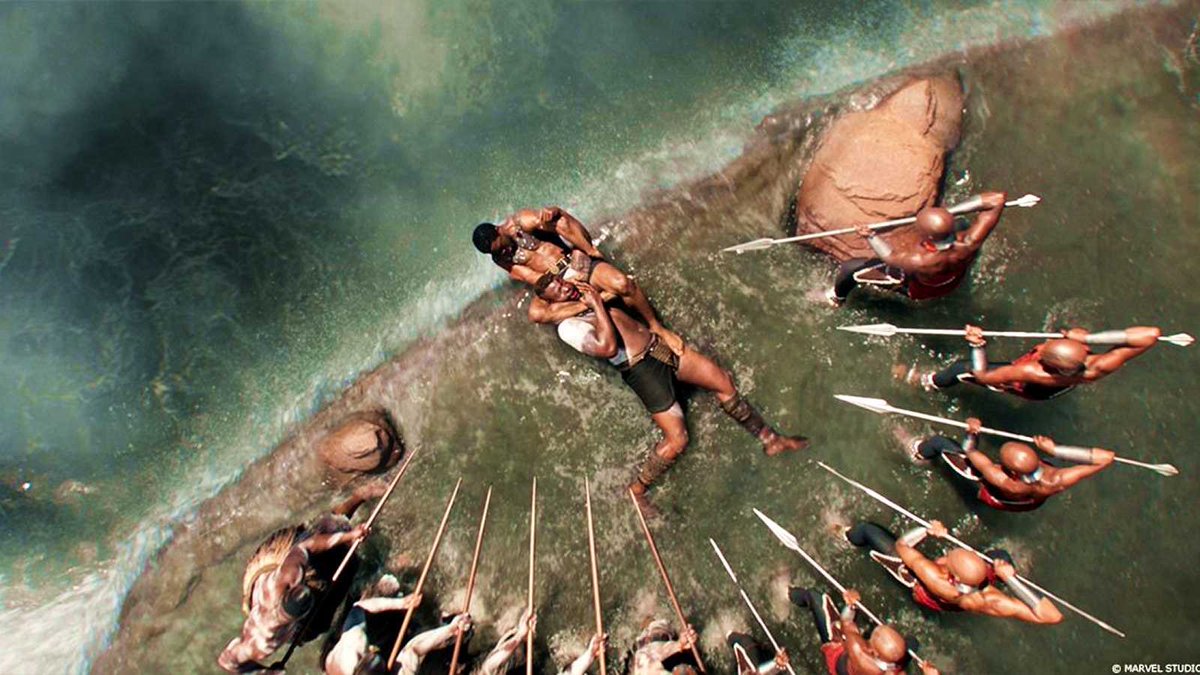
In Black Panther (2018), the leader of the Jabari tribe, M’Baku, challenges T’Challa to ritual combat.
T’Challa: yield man! Don’t make me kill you
M’baku: I would rather die!
T’Challa: you have fought with honor! Now yield! Your people need you!
^ this seemingly throwaway sentence is T’Challa’s real first kingly act. Consider how tempting/easy it would have been to kill a rival who had just stabbed you in the chest. But it would have left the Jabari leaderless, humiliated, resentful, and the next leader would likely have been vengeful.
A king is a conduit for the honor of his people. A tyrant or weakling tries to hoard it personally, continually demands more adoration, dries it up with his neediness and impulsivity. A good king honors others in turn, artfully, and in so doing, keeps the “honor economy” flowing.
Pericles’ funeral oration is another great example of allocating honor, articulating a societal/cultural framework for others to participate in.
T’challa: “He killed his own brother and left a child behind with nothing. What kind of king– what kind of man– does that? my uncle N’Jobu may have betrayed us but my father may have created something worse.” – T’challa, anticipating N’jadaka / Killmonger, confirming the earlier theme.
Only on my 4th(?) rewatch did I really notice that, when N’Jadaka dies (after saying “bury me in the sea with my ancestors who jumped from the ships because they knew death was better than bondage), T’Challa crosses the arms of his corpse– embracing him as a Wakandan till the end
(video to watch: Matthew Colville on Politics for ttrpgs)
— 6. Royal Touch —
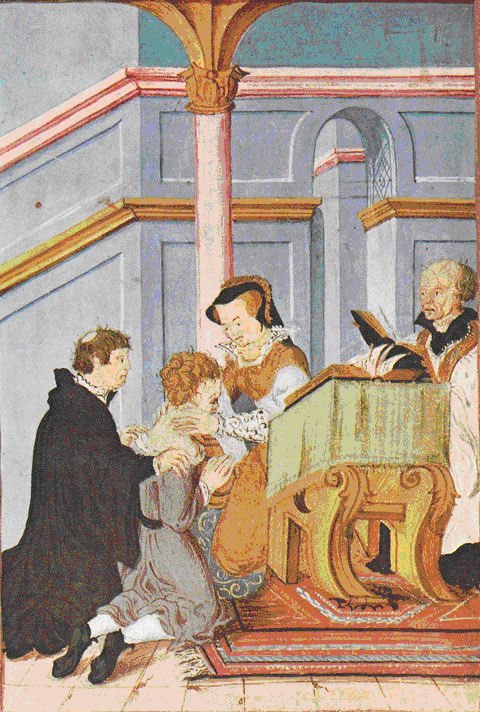
I’ve been thinking about this re: the idea of “royal touch”. People still do this today with celebrities, hoping senpai will notice them. (the galaxy-brain move is to become your own senpai. seek the senpai within.) but the phenomenon is still fascinating. Maybe some people literally believe that shamans have magic healing powers, but I think there’s something a little more nuanced going on, something about the economics of attention, and the 👑 as a sort of talisman of the egragore’s power…
IIRC a version of this is like when someone posts a sob story on /r/bodybuilding and then Arnold Schwarzenegger himself actually shows up in the replies offering encouragement, and it seems to legitimately transform the person’s life. How does this work? It’s fascinating
it’s not the words of encouragement themselves, since the words are the same as you’d find anywhere else. It’s that Senpai Noticed You, and Senpai’s time is precious and expensive. It’s kind of silly, but if it works… idk, I’m conflicted.
there’s a certain “you have been chosen by the representative of the entire community, don’t waste this” energy to it. It’s not the senpai himself and it’s not the 👑, it’s actually the entire community, I think.
a senpai is a human switchboard for the status economy of a community. when I say “become your own senpai” I mean this in a sort of IFS sense, earning your own trust and self-respect. There’s something intrinsically a little silly about this job… but abdicating is worse IMO.
the senpai must acknowledge that he or she is just inhabiting a role, and it’s a service role, really, one that comes with a lot of responsibility. (See: Dune quote on transitory greatness)
and ideally everyone else should acknowledge this too, but alas
nevertheless the nature of responsibility is that it should not be abdicated just because some fools behave foolishly. that then descends into governance by fools, indirectly. Which, hmm, is the fools’ Will to Power.
and there is also wisdom in the fool’s refusal to be regulated so it’s all very complicated and there is never a substitute for judgement.
— 7. unintegrated —
In a conversation with Ms. G I wondered, what would we say to our younger selves to try and prepare them for the absolutely unhinged characters we would encounter as we got older?
1. Kid, you know you are different. This is profoundly, profoundly true to a degree you will spend your entire life making sense of.
2. You want to be a good citizen of the world, a good custodian of the commons, you want to leave the world better off. NOT EVERYONE IS LIKE THIS.
3. Wtf, you say. Why wouldn’t anybody want to be a source of joy? Because they are scared. Joy takes courage. You’re scared too. I’m scared too. Everyone is scared. But some people face their fears and others cower away from it. And the more these people avoid their fears, avoid their dreams, avoid everything, they become haunted spirits, ghouls, zombies, vampires, detached from their emotions, cut off from light. You struggle to understand them because they have descended into madness and chaos. They have abdicated their thrones, their kingdoms are in ruin and disrepair, the war of all against all.
4. You want to help others. That is kind of you. Because you wish somebody had helped you, and nobody did. In this way you are making an effort to reshape the world into something kinder, more just. That is truly wonderful. But. Not everyone is like you. Not everyone wants to receive help. Not everyone appreciates it, respects it, honors it. Some will reject help. Some will attack and antagonize those who help. Strangely, the best help you offer others will often be simply you living your best life as a shining example of what is possible.
— 8. Shamans are meaning-workers —
(2021oct19) someone asked me for my definition of shaman.
to me, a shaman is a meaning-worker. someone who is a deep appreciator, understander and respecter of meaning, who can help other people work through their own meanings. anybody can do shamanic work, just like anybody can tell a joke.
to be a meaning-worker you have to understand both the awesome power and the absolute limits of meaning and meaninglessness. there’s a reason shamanic characters often tend to be kind of cheeky, silly, insane. Because they’re playing with boundaries.
like the tailor or the blacksmith, the shaman is a specialist who learns his craft well so that he might serve others. he is the storyteller, the contextualizer, he helps people make sense of their lives and their struggles.
here’s an example of shamanic work: “One of my favourite stories I saw on reddit was a parent who taught her child that the secret of Santa is that YOU get to be Santa, and you get to join the secret group of people who make the world a better place for other people. I find that very compelling and heartwarming”
It’s about finding a way to reframe a story in a way that is rich, meaningful, compelling. it requires a sensitivity to people, and also a playful disregard for existing frames. it’s trickier than it might look! it can go very wrong.
Faulkner had shaman energy: “all of us labor in webs spun long before we were born… the ripples of consequences echoing down the generations… the demands of life distract from this resonance of images and events, but some of us feel it always”
shamanic types are endlessly fascinated by the power of talismans, aka meaningful objects and ideas. they hit “inspect element” on meaning and mess around with the source code of human culture, to really understand thought and emotion
a fun nerd project might be to plot out a taxonomy of different classes of shamans. I’m a word-shaman, obviously. (2018: “My goal in life is to be a word artist-magician. Words are proxies for thoughts, and a master manipulator of words is a skilled navigator in the tumultuous ocean of meaning. Moana, but the ocean is the mind of humanity”) it’s conceivable that another shaman might eschew words entirely and do their work in absolute silence.
the shaman is the synthesizer of both the deathly serious and absolutely irreverent. what separates him from an unhinged quack is, there’s a method to his madness. it’s the sensitivity and perceptiveness to the needs of the… client (why am I like this) that makes the difference.
there’s a lot of fun stuff to get into about symbols and symbolism, but I think people tend to overindex on that. every shaman is invariably a symbolism otaku, but not all symbol geeks are shamanic. it’s the work – serving others – that really matters
but also, sometimes the best way to serve others is to be gloriously indifferent to them and to focus entirely on being a goddamn nerd yourself. and sometimes the worst way to serve others is to try to fix them.
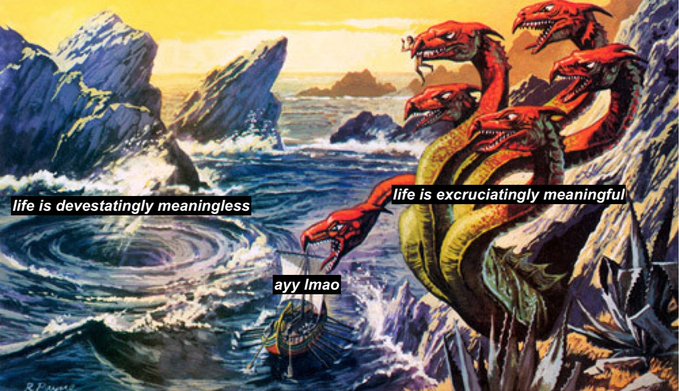
you see the humor that runs through the whole thing?? ayy, lmao
a shaman who takes himself too seriously will be destroyed, a shaman who doesn’t take himself seriously enough will be devoured, and so every shaman is indulging in a kind of psycho-cultural extreme sport but I repeat myself (see first pic at the top)
✱
On Placebos: i do think that a lot of the benefit of doing something is (1) believing that it’ll benefit you and (2) recognizing that you’re doing something to take care of yourself
grandma’s chicken soup works extra good because grandma loves you and being loved is healing
0531- do things for placebo purposes
—
notes, to be continued
authority figures: a thing that I’ve sort of been shadowing from my conscious self but I do know it in a felt way is that people do look up to legitimate authority figures. A part of denied this for a long time because I did not respect the authority figures in my life. KWML