VVM The Visakanv Megaweb The Visakanv Megaweb
X/Twitter Writing Videos Library Bookmarks
Menu
Best Tweets All Tweets Best Threads All Threads Longest Threads Themes Recurring Retweets Network Stats Wander
One Million Words Visakanv’s Blog Frame Studies Medium Visakanv’s Marketing Archive
Themes Playlists
Writing Books Films & TV Videos Games Music Comics Websites Podcasts
Tweets Videos Writing

Welcome to theVisakanv Megaweb

Since 2008, Visa has been thinking out loud on the internet, sharing his ideas with the world. The result: a quarter-million tweets, more than a thousand essays and blog posts, and hundreds of videos. The Visakanv Megaweb collects all of it, plus the books and media Visa keeps recommending, into one archive, organized so you can find your way through. Pick a place to start.

262K
tweets
1,251
essays & blogs
459
videos

An archive of Twitter postsby Visakan Veerasamy

Visakan Veerasamy (@visakanv) has been posting on X (formerly Twitter) since 2008, racking up more than a quarter-million posts across dozens of topics. The Visakanv Megaweb organizes them into a single archive you can browse without friction. Explore Visa’s most popular posts, favorite themes, and online network via curated lists. Looking for something specific, or want to browse the archive your way? It’s all here: filters for date, length, and more, plus search across text and handles.

262K
tweets
26K+
threads
36
themes
01↗

Best Tweets

A list of his 1,000 most-liked posts and thread-openers. The place to start.

02↗

Best Threads

Visa's most-loved threads: the 1,000 best by likes. Start here, then page through to the full archive.

03↗

Longest Threads

Visa's biggest megathreads, ranked by length: his longest unbroken sequences, up to 200+ posts.

04↗

All Tweets

The complete archive of every tweet from @visakanv’s X/Twitter account. Filter by type (replies, quote-tweets, originals), theme, date, and popularity, with full-text search to locate any post.

05↗

All Threads

All of Visa’s X/Twitter threads in one place: 26,000+ since 2008. Sort by likes, length, or date, and search for specific posts.

06↗

Themes

The 36 themes that recur throughout @visakanv’s posts. Open one to explore its most popular tweets and search within the category.

07↗

Recurring Posts

The top 1,000 posts Visa quotes and reshares himself. Enter to explore the ideas and themes he keeps coming back to.

08↗

Visa’s Network

The accounts Visa engages with most, measured by quote-tweets and replies. Dive in to see the extended Visakan Veerasamy online universe and follow their conversations.

09↗

Retweets

Every post and account Visa has amplified: 10,711 retweets since 2010, self-retweets aside. A map of who and what he points his audience toward.

10↗

Stats

The shape of @visakanv’s 262K+ tweets: replies, quotes, posts and retweets, volume by year, the themes he returns to, and the all-time records.

11↗

Wander

Land on a random tweet from the archive, pulled from Best Tweets and the top posts in each theme.

let down and hanging around

Frame Studies · Psychology & Emotions · 2026 · 1.2k words

Visa reflects on how Radiohead's bleak music gave him access to his own sadness, contrasts his public optimism with private despair, and meditates on artistic evolution while facing exhaustion as a parent.

let down and hanging around

reminiscing about radiohead
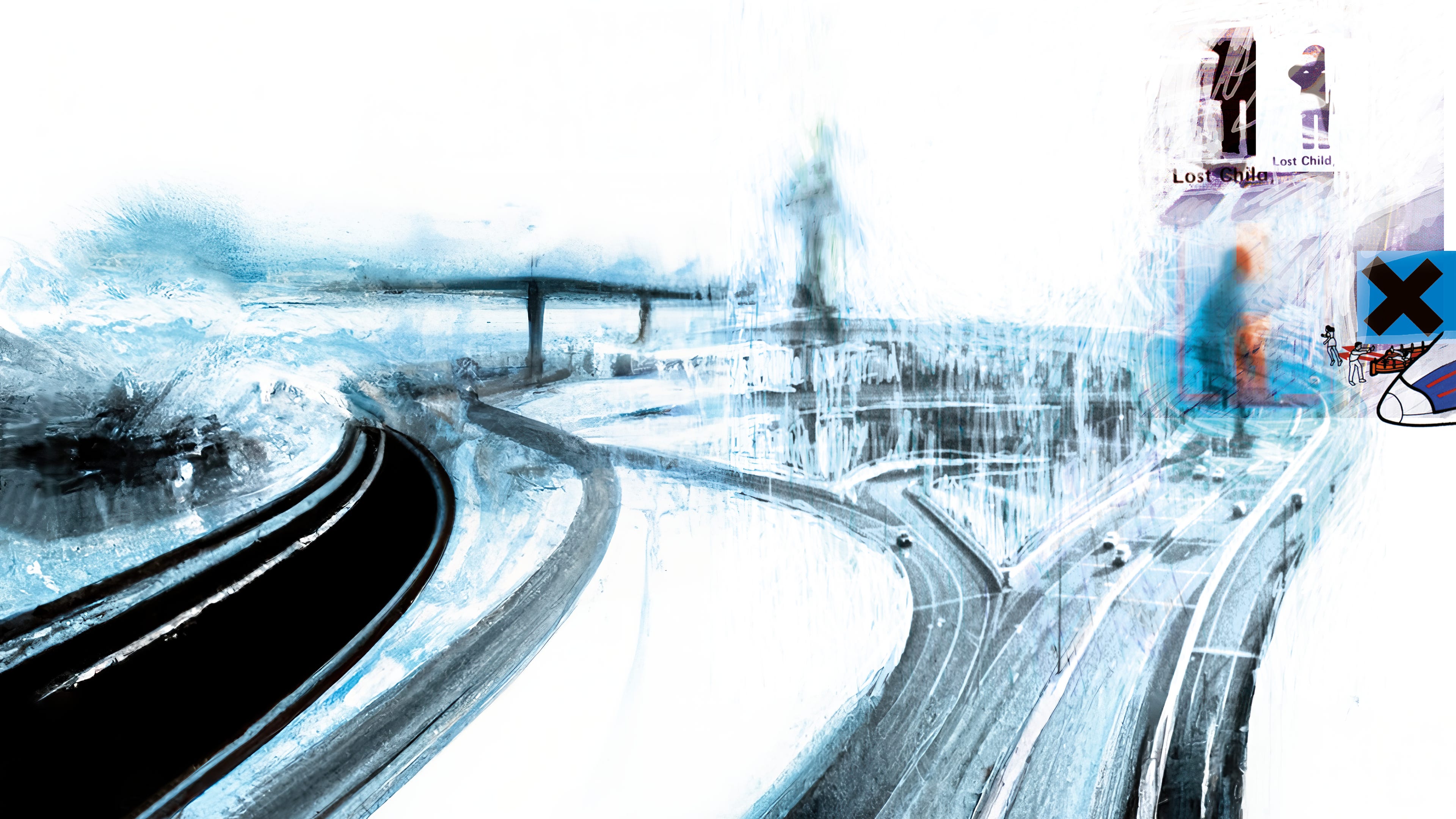
visakan veerasamy·March 26, 2026
Uncropped the 'OK Computer' album cover + Wallpaper Crops : r/radiohead

i. a heart that’s full up like a landfill

When I was introduce to Radiohead in 2003 as a 12-year-old, it cracked me open in ways that nothing had done before. I’d mostly only listened to stuff on the radio until then. Songs like Street Spirit and No Surprises felt achingly bleak in a way that almost didn’t seem ‘allowed’, at least according to my frame of reference as a Singaporean.1 And the soaring elements in Fake Plastic Trees and Let Down2 would give me a swelling in my heart unlike anything else I’d felt at the time. I’d plaster the lyrics all over my website and use them in my MSN Messenger screen name and scribble them on my folders and notebooks. Radiohead gave me access to parts of myself that I didn’t quite have before. I have cherished memories of blasting OK Computer on my Discman at full volume after school, walking through a blur of commuters, fully feeling my alienation from everything. There was something glorious about it even as it was sad. Maybe it was that for a while I fell like I was fully owning my experience.

I find myself thinking about other media that did similar things for me. Anime was similarly surprising when I first encountered it. I had watched all sorts of cartoons on TV before, but several of the went to a darker place, asking questions like, is redemption possible? Can one truly atone for one’s sins? How does suffering beget suffering? How are monsters made? It was unflinching. I was 10, and it was some of the realest shit I had encountered yet. Along with books like The Chocolate War, and After The First Death by Robert Cormier. These were ‘deeply pessimistic’ books where terrible things happened to ordinary people, and then things got worse, and there was no happy ending or resolution. Why was I reading books like that? I was drawn to them, they felt like they were saying something true that I needed to look at. Why did I “need” to look at it? I felt somewhat incomplete or unfinished without it. I’m reminded of a line from Karl Paulnack’s welcome address to the Boston Conservatory3 (2004) – he said, “Music has a way of finding the big, invisible moving pieces inside our hearts and souls and helping us figure out the position of things inside us…” – those works, while pessimistic, helped me acknowledge how I was feeling.

I would feel happy if you subscribed.

ii. one day i am gonna grow wings

People on twitter tend to know me as this really upbeat, optimistic guy, and sometimes they assume that that means I’ve had a charmed life, full of happiness and good cheer. And that’s not really the truth. The truth, which is harder to express in 280 characters, is that I’ve always been a really sad person, wistful, even despondent and despairing. The optimism I’m known for is a response to all that. The lotus of my optimism grows out of the mud of my despair. And really, someone with a blissfully charmed life probably wouldn’t think to make a big fuss about being optimistic and prosocial and so on. They’d just be that way naturally. It would be something that they’d take for granted. I don’t take mine for granted, because I had to fight for it.

Lately though I don’t know if I feel as optimistic as I used to. I went through a personal crisis a while ago that I’m still not comfortable talking about. I’m also really tired all the time, largely from being a parent. I’m not doing too great financially, and I have another baby on the way soon– which means I’m not going to get any less tired any time soon. I’m going to have to figure out ways of becoming more energetic within the spaces I already have. Which is funny to talk about in a post that cites Radiohead, because they have a song called Fitter Happier that kinda mocks the whole notion. But we have to try anyway, right? Even if we are the pigs in a cage on antibiotics. We can see the bleakness of the situation we’re in, poke fun at it, and still have to live it.

iii. somewhere we will meet

I also wanted to think through Radiohead’s career and discography, because I think there’s been an interesting development there. A question I’ve been grappling with for some time is, how did they do it? How did they go from Pablo Honey (1993) to The Bends (1995) to OK Computer (1997)? In case you’re unfamiliar with the albums, a quick overview– the first album was the one that had Creep in it, which was a breakout hit, but not really what the band wanted to be doing. The rest of the album was somewhat grungy, angsty rock, much of it forgettable. The second album was much more interesting and sophisticated, with several great songs. But the third was something truly magnificent, genre-breaking, world-changing. It was released 29 years ago, and if they had released it next year it would still feel fresh, relevant and surprising. How?

I asked several LLMs. Claude gave me an fun answer, which is “they kept following their anxiety rather than their success.” ChatGPT said “they weren’t a grunge band, they were a weird art-rock band temporarily dressed as one”. Grok emphasized how they were willing to reject comfort, used success as license to evolve, and treated each album as a chance to learn and reinvent. Deepseek emphasized that the crucial element was “their willingness to be uncomfortable”, how they resisted the easiest path and instead “followed their own curiosity and frustration, even when their record label was nervous.”

I’ve been reflecting on this question for years now, because I feel similarly that I don’t want to simply do remakes or reruns of my existing material. I don’t want to play a popular hit just because it did numbers once. I want to grow and evolve as an artist. I want to risk failure and make mistakes and try strange and unusual things. And I have a lot more to say about that, which I think I’ll get into tomorrow.

1

Fun side-digression here about how the most popular national song in Singapore is a bittersweet one that opens with “whenever I am feeling low”, and the committee was skeptical about it, because they were used to the idea that national songs are supposed to be upbeat. How can Singaporeans be feeling low??

2

I am very, very pleased to hear that Let Down has been discovered and popularized by the kids on TikTok. The kids are alright!

3

This is one of my favorite speeches of all time. I remember quoting it extensively for a talk I gave in Junior College, and I basically quote it at every opportunity I get.

Originally published at https://visakanv.substack.com/p/let-down-and-hanging-around.

An archive of books and mediareferenced by Visakan Veerasamy

Visa is a prolific consumer of art and media. Over the years, he has referenced, reviewed, and recommended thousands of books, essays, articles, comics, and videos. The Visakanv Megaweb pulls his collection together in one place. Each item carries a link tracing it back to the mention.

Sort

About the Megaweb

The Visakanv Megaweb is a public archive of everything Visakan Veerasamy (@visakanv) has put on the internet: a quarter-million tweets, more than a thousand essays and blog posts, hundreds of videos, and the books and media he points to.

Visa has been thinking out loud online since 2008. The result is one of the largest bodies of personal writing on the web, but until now it has lived in scattered places: threads you unroll by hand, blogs on separate platforms, videos spread across years. The Megaweb pulls all of it into one place you can read and search.

What’s inside

The archive is in four parts. The Twitter Archive holds his posts, threads, replies, and quote-tweets. The Writing Archive collects his essays and blogs across three collections. The Video Archive gathers his vlogs, talks, and readings. The Library is everything he points to: the books, essays, articles, and videos he references in his own work.

How it’s organized

Each part is built to be browsed on its own terms. Read a theme from top to bottom, sort by what is most-loved or most-recent, narrow to replies or originals, or search the text directly. Every item keeps a link back to where it came from.

A note on the data

Counts, excerpts, and rankings are drawn from Visa’s public posts. Sourcing and update cadence are still being finalized.

Writer and internet builder, known online as @visakanv. Here are his books, where to support his work, and where to find him.

His books

FAN Friendly Ambitious NerdOn becoming a kinder, bolder, more curious version of yourself.Gumroad →Goodreads →
INT IntrospectAn inward hero’s journey to earn your own trust and self-respect; a remix of Nietzsche, Emerson, Watts, Campbell, and Jung.Gumroad →Goodreads →

Support his work

Become a patron on Patreon →

Find him online

X / Twitter@visakanv ↗ Instagram@visakanv ↗ Facebookvisakan.veerasamy ↗ Substackvisakanv.substack.com ↗ YouTubeyoutube.com/visakanv ↗ Websitevisakanv.com ↗
An archive of Visakan Veerasamy’s online work.
Set in Fraunces, Geist, and Geist Mono.
Built by Mars Code Factory.
The Twitter Archive›Best Tweets

Best Tweets

Many tweets from Visa are popular, but some are more popular than others. Browse the 1,000 most-liked top-level posts in Visa’s Twitter archive.

The Twitter Archive›Best Threads

Best Threads

Visa is known for megathreading, and has written more than 26,000 threads since 2008. Explore his threads, including the longest and most popular. To page through every one, browse the full list →

The Twitter Archive›Longest Threads

Longest Threads

Visa's biggest megathreads: his longest unbroken sequences, up to 200+ posts. See the best-loved →

204
tweets in the longest thread
7.3
years, longest-running thread
84
tweets, avg. length

The Twitter Archive›All Threads

All Threads

Every thread Visa has written: more than 26,000 since 2008. Search the text, narrow by year or length, and sort however you like. See the 1,000 best-loved →

26,381
threads
2021
peak year
102,048
tweets in threads
Search
@
→
Length
Year
Theme
26,422 threads

The Twitter Archive›All Tweets

All Tweets

Here is every reply, quote-tweet, thread, and standalone post from Visa’s Twitter archive, more than a quarter-million in all. Retweets aren’t included here. Browse all his retweets →

Search
@
→
Type
Theme
Year
251,277 tweets

The Twitter Archive›Themes

Themes

Visa’s tweets have common threads and narrative arcs if you look closely. Explore the themes he’s focused on across his years on Twitter, and the tweets in each.

Search
36 themes
The Twitter Archive›Recurring Posts

Recurring Posts

Visa is known for quoting and resharing his own tweets, often to resurface an insight or reinforce an idea. See every time he’s quoted himself or brought an old post back into a conversation.

34,006
self-quotes
13,033
distinct ideas
339
most resurfaced
Search
Year
Theme
4,874 recurring ideas

The Twitter Archive›Retweets

Retweets

The accounts and posts Visa amplifies. Not his words, but a record of who and what he has pointed his audience toward over the years. Self-retweets aside, here is everyone he has reshared.

The Twitter Archive›Network

Network

If Twitter is a public town square, Visa is the hyperactive, affable guy who talks to everyone: nearly half his posts (45%) are replies to other people. Below are the 100 accounts he replies to most.

The Twitter Archive›Stats

Less a body of work than
a body of conversation

The shape of it

Every post and retweet, sorted not by what it’s about but by what it is.

How the mix shifted

His blend of replies, quotes, posts and retweets as a share of each year. Hover for any year.

Volume over time

Themes

What he posts about most. Toggle to see what actually lands.

His network

The accounts he engages with most. Toggle replies, quote-tweets, or retweets; tap a bar to open the account.

…and the same as a bubble field: the top accounts he replies to and quotes most, sized by how often. Hover or tap a bubble.

Hall of fame

All-time records across the archive.

The record-setting tweets

All of Observations & Humor

The Twitter Archive›Themes›Observations & Humor›All

Every tweet in Observations & Humor. Search the text or a handle, narrow by date or to replies vs. originals, and sort however you like.

Search
Type
Year
16,834 tweets
reply312 likes2026-05-22
original2.1K likes2026-05-20
reply84 likes2026-05-19

placeholder copy and data · this same page serves any scope (a theme, an account)

The Twitter Archive›Network›Account

The Twitter Archive›Network›All

Search
Year
Datesto

Your bookmarks

VVM The Visakanv Megaweb

The collected online writing and media
of Visakan Veerasamy (@visakanv)

Built by Mars Code Factory

llms.txt