wallflowers
Frame Studies · Art & Creativity · 2026 · 1.4k words
Visa reflects on art as feeling and failing, using Singaporean examples like a civil servant love story and Singlish t-shirts, and asks what makes art real, not just numbers or gatekeepers.
wallflowers
musing on art again
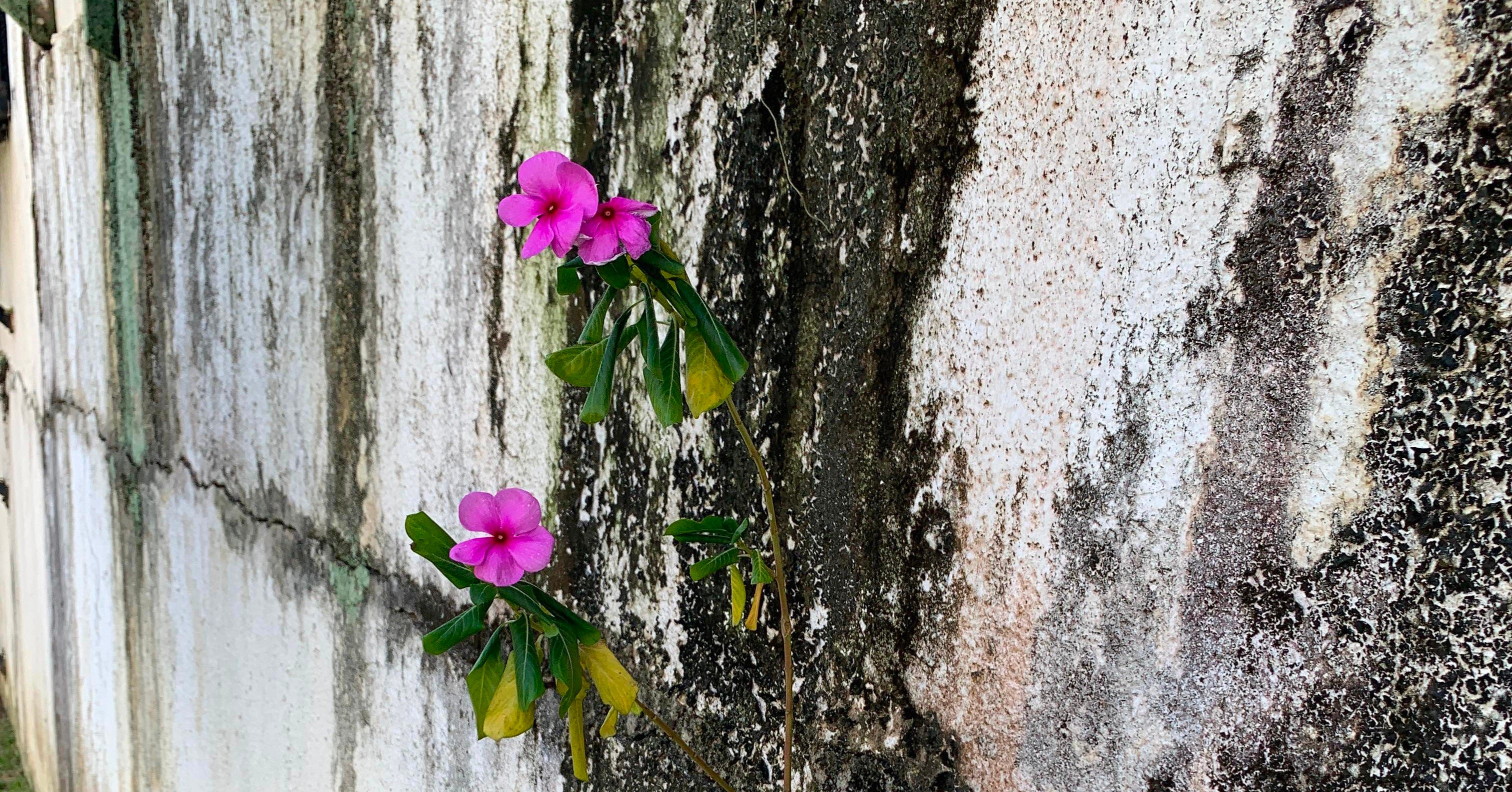
One of my favorite examples of Singaporean art was from a pseudonymous tumblr (pls-revert.tumblr.com) that posted from 2010 to 2013. The author collected examples of singaporean bureaucratic english (she called it civilservant-speak) out of frustration. Initially it was just a catalogue of quotes and screenshots, but one day she posted a 1000+ word post titled $trategic KPI + %Synergy% = Love (2011) that I still think about 15 years later– a surreal, funny, tragic civil servant love story. It felt earnest to me, and to me it captured something genuine about the tension of living in a “sterile” place like Singapore. I’m always visualizing us as flowers growing out of cracks in the concrete.
✱
What is art, and what does it mean to be an artist? I wrote about one of my preferred definitions in to feel and to fail – that the artist specializes in feeling their feelings as deeply as possible, and then persists through the failure of trying to share those feelings. Through the act of sharing we’re challenged to develop an understanding and hopefully an appreciation for people, and the spaces between us.
I think this definition is correct, but I don’t think it’s widely shared, especially by people who don’t think of themselves as artists or caring about art. My sense is that most people– especially the people I grew up around– see the word “artist” as something that has to be conferred upon someone who has attained “artistic accomplishments”, ie have their art verified as valuable by cultural gatekeepers and authorities. Talking about it this way already starts to feel dated, because the Internet and social media has removed the gates, allowing anyone to talk to anyone. This was really exciting for a while; it seemed like we were on the cusp of some kind of big revolution. But I think the past couple of decades have shown that, for a lot of people, the ‘legitimacy’ of the magazine cover has simply been replaced by the ‘legitimacy’ of viral numbers.


Oh well. We do what we can with what we have, and if that means being broadly misunderstood, that’s how it’ll have to be.
✱
The thing I’m noting about KPI+Synergy=Love is that it was hardly noticed. The people who liked it sure liked it a lot, but there weren’t very many of us.
Also I’m noticing that the work feels like it was meant to happen at a particular moment in time– in 2011 it felt surprising and subversive, in 2026 it feels a little ham-fisted and unsubtle. I think that’s something kind of inevitable for any good art. My friends and I tried watching 2001: A Space Odyssey (1968) as teenagers and we found it difficult to get into, because we’ve seen so many parodies of it over the years. (I’m sure it’s possible if we locked in, but we were being silly kids.)
Re: the decay of subversion, I feel similarly about the t-shirts that I made around the same time period, largely centered around the gimmick of taking Singlish colloquialisms, spelling them out in vaguely literary typefaces, and slapping them onto t-shirts in a stark simple way. At the time, it felt subversive because Singlish was still something we were supposed to be ashamed of. Today it’s something we’re mostly proud of, and consider a precious marker of our identity. And now Disney does what I was doing (but more sanitized, since they leave out the swear words), so it’s become mainstream.


✱
Growing up in Singapore in the 1990s, I very much got a strong message from the culture, from the adults around me, from everyone, really, that the arts were inferior to the sciences, and that you couldn’t make a living from it. This came all the way from the top– in 1968, Lee Kuan Yew said “poetry is a luxury we cannot afford”. It took me a while to properly contextualize this as a very particular post-war, newly-independent cultural anxiety. I remember being a little confused when learning about opera companies and dance troupes in Singapore the 1800s. How come our forefathers could afford the arts, when they could barely afford anything at all?


Looking back, the monomaniacal focus on STEM was a gamble, and it’s really still too soon to say whether it was really for the best. Could it be that people who were raised to think of themselves primarily as economic digits would then find it economically unproductive to have children? But birthrates are declining all around the world, so I don’t know if Singapore should be uniquely singled out for this.
I have a lot more I wanted to say about all of this, but I have a feeling that if I leave this in my drafts, it’ll just languish in there forever, so I’m going to hit publish and maybe add more in the comments later or in a subsequent edit.
It’s funny, the original idea for this post actually came from thinking about parent/family bloggers and influencers, and wondering what my own position was– how much am I going to talk about my kids, as an author? How do you do it in a way that is beneficial without being exploitative? And I got to thinking about the difference between “content” and “art” again, and then I started thinking about the history of my own understanding about those terms.1
I guess I’ll end2 with a question, because I do need more information and context about this: what was your introduction to art? What were you told art was, or wasn’t? What do you first remember thinking “this is art!” about, in a way that felt like the assessment came from within you, rather than your understanding of what “society” thinks is art?
I also guess I should add that part of my motivation for writing this particular post was to re-affirm that I want to be an artist who makes art. I was going to get into this whole side-thing about how, in some ways, sometimes, writing feels like the “lowest” of the arts. music is art, painting is art. writing was invented by bureaucrats to tally goods. that’s okay i’ll still keep producing that garbage
I haven’t yet thought about a title for the post. “notes on art” feels too lazy. i should scan the post to look for something that i’ll want to develop further. this is slightly annoying, that i have to make a decision about this, because it does get ‘locked in’ into the substack url. i think it’s art-after-something? or art in the age of something? art after art? decay? eh, maybe i’ll just lean into the visual, “flowers in the concrete”? but the image already does that. aliveness? “art vs content”? I didn’t really get into it though. ah, wallflowers. good enough. can elaborate later maybe. idk i’m going with it
Originally published at https://visakanv.substack.com/p/wallflowers.