"The struggle is real." - 8 things dozens of SMB entrepreneurs have in common
Medium · Work & Ambition · 2018 · 3.2k words
Visa explores common traits and perspectives shared by small business entrepreneurs, highlighting their unique burdens and leaps of faith.
"The struggle is real." - 8 things dozens of SMB entrepreneurs have in common
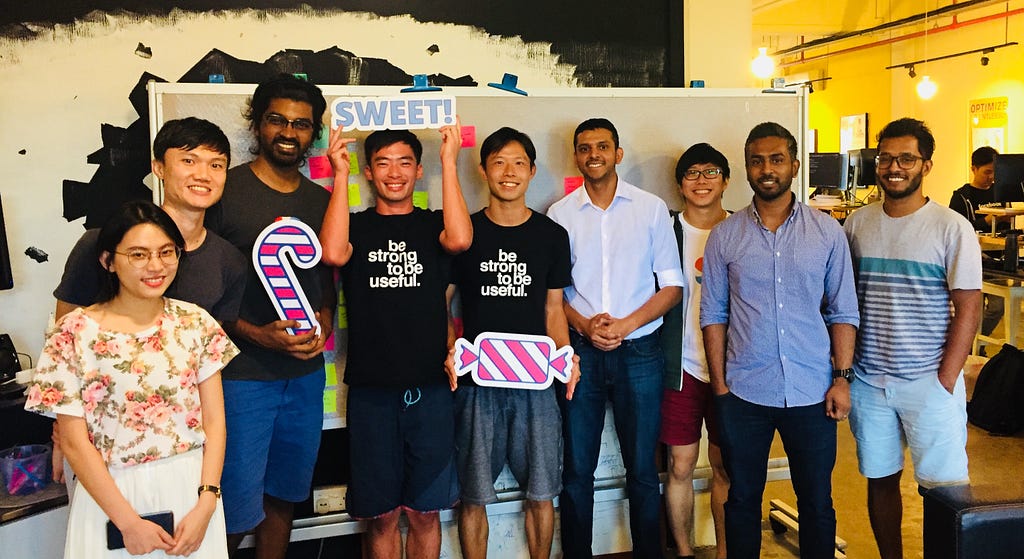
“The struggle is real.” 8 things SMB entrepreneurs have in common that sets them apart
At CandyBar, we’ve been spending a lot of time working to help entrepreneurs with their challenges. Here’s an overview of what we’ve been learning.
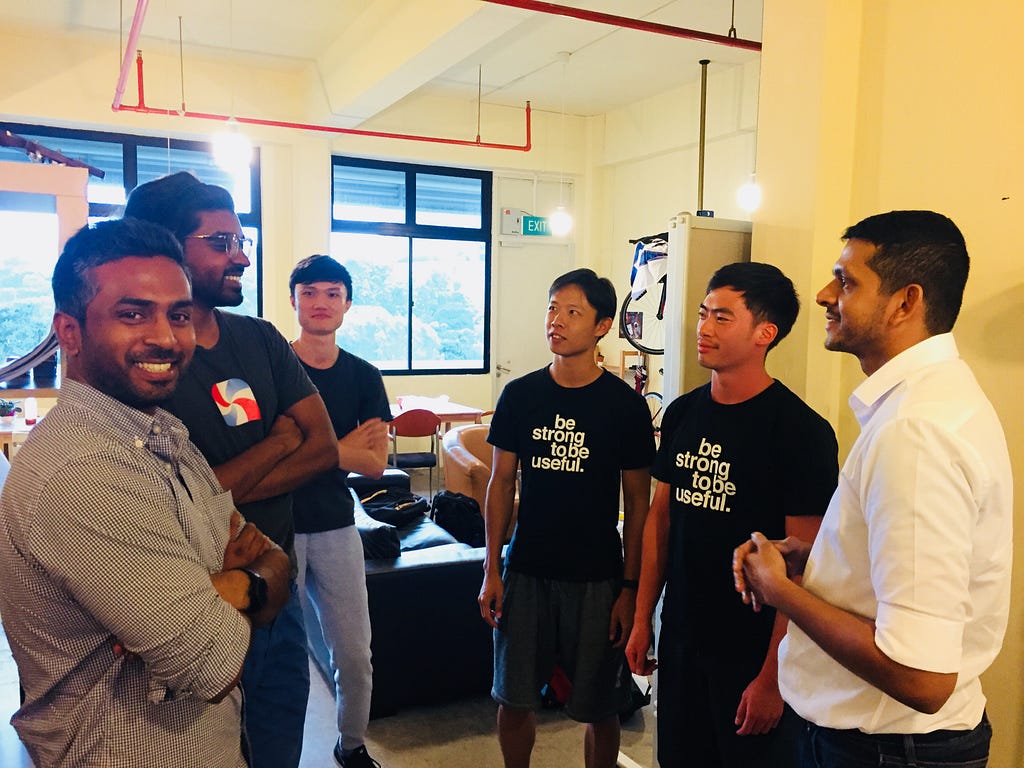
I’ve been talking with lots of SMB entrepreneurs lately from all sorts of backgrounds — movement coaches, cafe owners, career consultants, wedding planners, publishing houses. Recently, we helped MOVE Academy improve their business, and had a long chat with the team.
Here’s what’s been sticking out to me: I’ve found that most of them have several things in common — traits, perspectives, impulses, mannerisms — that definitely set them apart from most ‘regular people’.
I’ve shared these observations with multiple entrepreneurs, and they pretty much all agree that “Hey, that sounds like me!” So I thought I’d share this with a wider audience. Here we go:
#1. Entrepreneurs are burdened with vision AND a sense of obligation — they’ve all taken a leap of faith.
“Somebody should do something… and I’m somebody.”
This is perhaps the first “point of divergence” between entrepreneurs and non-entrepreneurs. Everybody has daydreams and fantasies — but entrepreneurs seem to be more pained than everyone else at the prospect of not doing something about it.
Entrepreneurs of all personality types, introverts and extroverts, “thinkers” and “feelers”, all seem to casually–yet–sincerely use words like “vision”, “conviction”, “leap of faith” and “courage” to talk about themselves and their work.
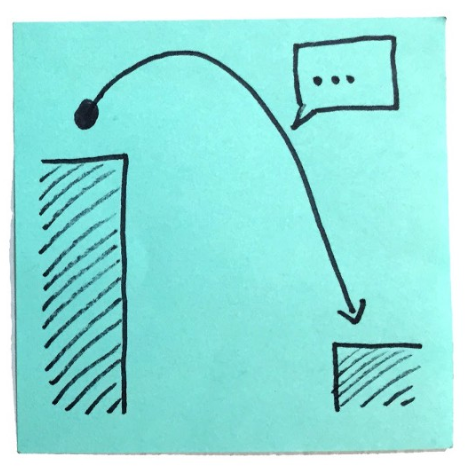
I’m naturally quite a creative person, and I really had passion and flair for my craft. I’ve always had a million ideas for things I would do to break the mould of the cafe market. I always had ideas that I was so sure would work, and I would always propose them to my manager. They’d get rejected — because of issues like costing, ordering, storage, the additional impact on existing operations, etc. So I was constantly on the lookout for the opportunity to start my own thing — and the moment I spotted one, I dove right into it. — Christine Seah, Dapper Coffee
Not every entrepreneur has a clearly-articulated grand unifying vision, or a super-elaborate business plan. But every entrepreneur has taken a leap of faith. And taking that leap is never easy, no matter how much preparation you do. It almost always boils down to “somebody’s got to do it, and I’m somebody”.
Interestingly, when I tweeted about this, someone asked, “But you’re probably talking to SMBs in tech right? That would explain the emphasis on vision and mission.”
And the answer is… nope! It’s true for restauranteurs and ‘traditional’ entrepreneurs selling everything from seminars to standing desks. Vision and mission may have become buzzwords, but they’re still fundamentally important to entrepreneurs.
Why is this so persistent? I think it’s because of the activation energy required to start a business. Unless you have lots of disposable cash to burn, starting a business requires you to decisively walk away from everything familiar and comfortable to most people.
I think every entrepreneur puts a significant part of himself into his business. Not just time, energy, money, but also vision, personality, values, ego, in a way. Self doubt is huge, when you struggle to meet your business goals, when you think you’re not good enough. When as the leader responsible for the entire business, you couldn’t think of the answer, or do the right thing that can unlock the answer to your goals. But even deeper than all that is the idea that your business is a part of you, a representation of you and your beliefs and values. For that to fail, and be rejected, can be extremely personal. It can feel like the world is rejecting your existence. […] All the way through, theres the questioning of whether even if we irreversibly compromise our values, whether we can achieve the vision. Is that vision even still meaningful? — Louis Puah, Praxium
#2. Entrepreneurs constantly battle self–doubt , and they do it in an arena where there are real stakes and consequences.
“But can I do it? I’ve never done anything like this before.”
To most people, the phrase “self-doubt” tends to imply a generalized self-criticism: doubting whether one is fundamentally capable, good, worthy. And that definitely is a question that many entrepreneurs have deal with — and sometimes one that they turn to entrepreneurship to answer.
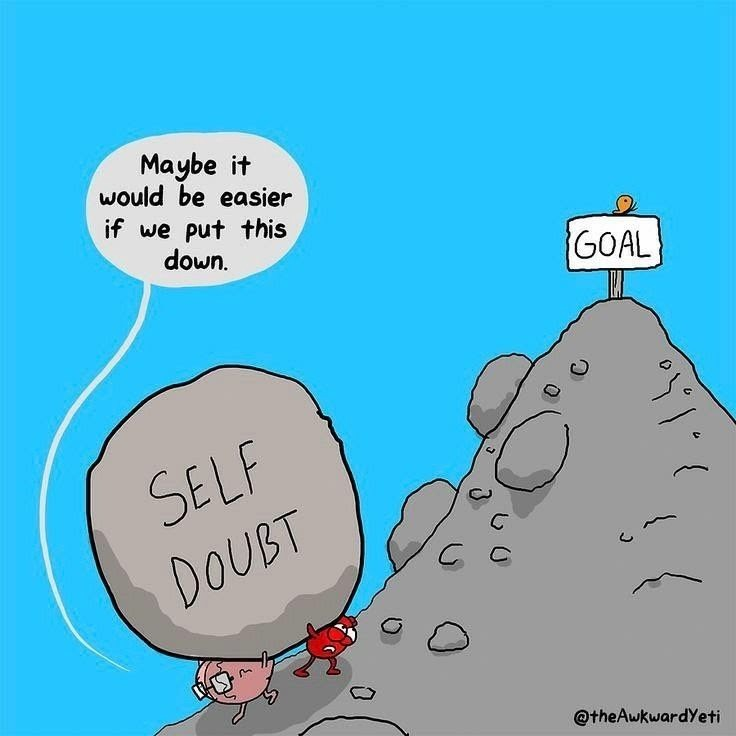
But entrepreneurs also grapple with a much more granular, nuanced sort of self-doubt than most people relate to. And that’s about contending with each aspect of their abilities.
Are you good enough to hire the right person for the job? Are you good enough to make the sale to the client? The success of your business depends on you being accurate in your self-assessments!
“I’m a specialist, and I’m focused on making the classes better. I rely on my teammates to focus on bring in sales. I did a strengths test — I’m all about relationship building. It drains me to think about sales.” — Fagan, MOVE Academy
Lots of people don’t know how to support entrepreneurs through The Struggle. For example, when they have self-doubt, it’s tempting to say, “Don’t doubt yourself!” But that wouldn’t actually be good advice, because self-doubt is part of what helps entrepreneurs survive in challenging and uncertain environments.
#3. Entrepreneurs endure increased accountability to others — to customers, employees, vendors, investors.
“I need to deliver the goods so I can realize our potential. I cannot let everyone down.”
The word “entrepreneur” literally means “one who undertakes”. To be an entrepreneur is to volunteer to shoulder more responsibility than other people. It’s to declare, “I think we should go that way,” and then bring people along with you for the ride — without being completely certain that it’s absolutely the right thing to do.
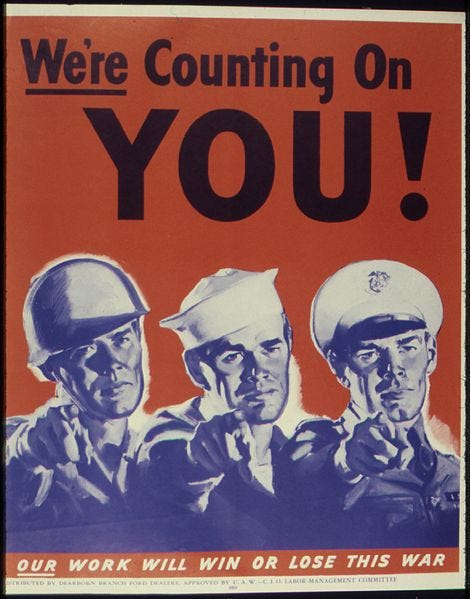

Just think for a moment about all the people entrepreneurs are accountable to.
They’re accountable to their customers, who will sometimes write scathing reviews online if something isn’t right.
They’re accountable to employees, who expect their paychecks to come in on time, but may not necessarily feel the same sense of obligation when it comes to clocking in the hours.
If they have investors, they’re accountable to them too — to give them a return on their investment.
Some entrepreneurs even feel accountable to all their friends and family — by choosing to strike it out on their own, they become a flag-bearer for the pursuit of dreams.
“I often feel guilty that I’m not giving Statement enough attention. I believe there’s still tons of ideas that we can explore with it. I feel like we are sitting on this huge mountain of potential, and possibly inhibiting its growth.” — Desmond, Statement
#4. Entrepreneurs appreciate the true nature of constraints better, because they’re rubbing up against them all the time.
“Can I feed my family doing this? Does a market exist? Will competitors eat me? Can I make payroll this month?”
As consumers, we never quite appreciate how tough it is for SMBs to survive — and how personal it is. Deciding to start a business is a very personal, overwhelming decision — and the moment you start, the timer starts ticking. Costs are guaranteed, revenue is not. And so begins a frantic race for survival.
And the following outcome is always looming large:
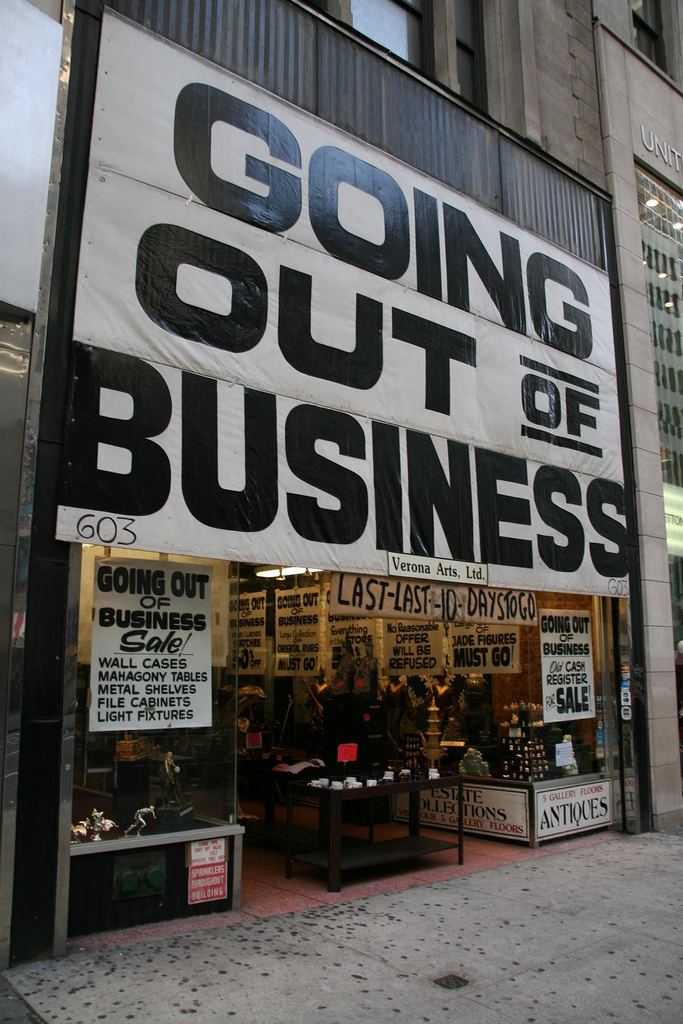
“Time is one constraint. We spend our office hours in an ad agency. After dinner, paperwork, and the occasional fitness/social/me-time, there’s not much time for anything else. Market size is another. Our brand isn’t directly scalable, so growing while remaining authentic is a challenge. We also have partners not paying up on time, which isn’t fun.” — Selena Soh, Temasek Clothings
This has all sorts of effects on entrepreneurs. Some liken it to the highs and lows of gambling. Others describe it as like “living in the wild”, hunting for every sale, warding off predators.
One thing is clear — SMB entrepreneurs are hypersensitive to the beating hearts of their business. Every sale, every review, every social media share has a real impact on their moods, even if they try to be somewhat stoic about it.
When I first started, I was the only cafe making a variety of homemade vegan-friendly milks out of nuts. We had hazelnut milk and macadamia milk, it was fantastic. But it took a lot of labour to make them, and nuts are expensive. One day I realized, “I’m just going to have to get packaged almond milk because it’s taking 2 days to make a batch of homemade nut milk and nobody’s buying it.” So y’know I had to really have a good hard think about what I do, and how to compromise creativity vs product quality vs cost vs marketability.
But in a way I felt it was good to have so many constraints, because you can only really do something out of the box when you have an actual box to work with. Unicorn Tears was my best work, arguably classified as a “perfect” product. it was creative, no one in sg had seen anything like it before. it was tasty, visually impactful, it was cheap and easy to make, and it sold like hotcakes. — Christine Seah, Dapper Coffee
Entrepreneurs are also always mindful of the opportunity cost of what they’re doing — many of them have walked away from lucrative, well-paying jobs in order to enact their vision.
#5. Entrepreneurs “wear many hats” — in a much more fragmented way than regular folk are used to (or can even imagine)
“I do everything around here — operations, accounting, sales, hiring, morale…”

“I was really exhausted. Trying to pull everything together — construction, manpower, suppliers and costing; was a considerable feat for one person. I struggled because of my lack of experience. I learned the hard way that running a café was a lot more than just the simple stuff like preparing items and serving customers.” — Samantha Koh, Curbside Cafe
This is obvious intellectually, but experiencing it is something else altogether.
You might start a business because you want to do your own thing — say, selling your specially-frosted cupcakes, which your friends have raved about. But you can’t just be a specialist — you also need to be a salesperson. You need to manage the numbers. You need good communication and interpersonal skills. You need to figure out how to hire people, fire people. You need to be an “influencer”.
How do you actually build that up in almost no time at all? Most of the time, you have to learn on the job. And that means enduring a lot of failure as you learn.
In school, we learned about the various fields of management, finances, technology— but until I experienced it for myself, I didn’t fully appreciate why there are specialists in each field. I understand now why there are entire disciplines about the various subsets of business. Each thing takes a lot of expertise. How can a single person build that up overnight? You have to figure it out as you go, on the job — and that means you’ll be failing a lot. — Fagan, MOVE Academy
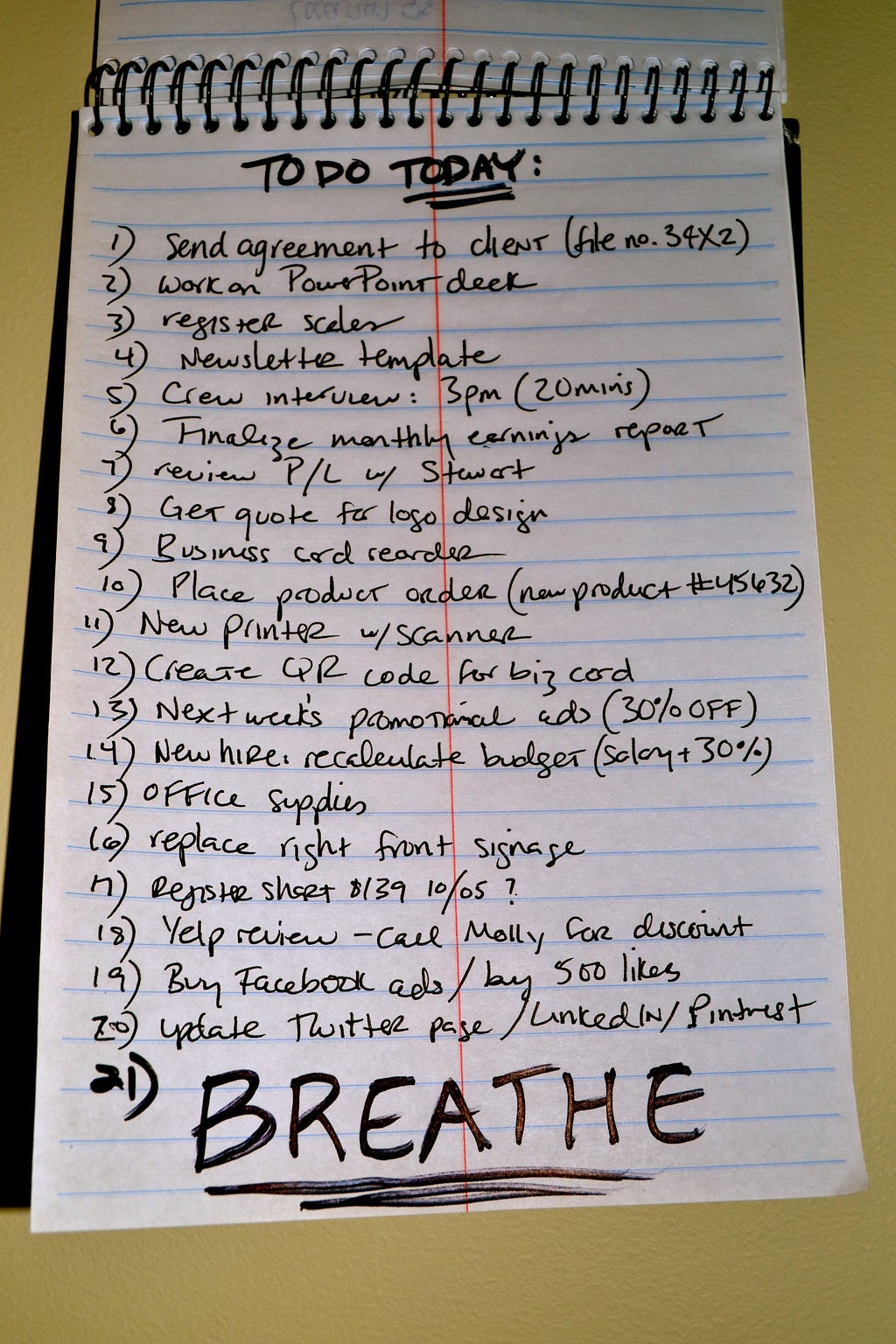
#6. Entrepreneurs are constantly overwhelmed with decisions, “fighting fires” and an infinite todo list
“I have more things to do than time to do them.”
“Our vision has always been to empower couples and the challenge has been to avoid getting distracted by other things. So the question we’re always asking ourselves is, “Does this help empower couples?” Recently we’ve looked at expanding the ways in which we empower couples but our end goal remains the same. Sometimes it can be helpful to distinguish between what the goal is and the means by which you try to achieve it. From time to time, the means might change but our goal is still the same.” ~ Dharma and Leana, The Wedding Scoop
Every entrepreneur is living in a sort of chaotic state in their minds, where everything around them is suboptimal and needs to be fixed, corrected, addressed, taken care of.
Nothing good happens unless you make it happen, while bad things happen all the time — sometimes because of your neglect and failure, and sometimes due to events entirely beyond your control.
“Our todo list? Well — there’s a mix of things we haven’t done, things we need to do now, and things we need to do in the future. At some point I realized I can’t just keep cleaning what’s due or past due. It’s always never done. So I have to touch a bit of everything, and be okay with the fact that every day is going to be like this. I have to keep reminding myself of that.” — Selena Soh, Temasek Clothings
#7. Entrepreneurs value relationships a lot, and often speak about them with a certain tenderness and reverence
“Through shared struggle, my partners and have developed extremely intimate bonds.”
To me, this seems related to the fact that they get to “choose their partners”. If you start your own business, you get to decide who you’re going to hire — and each person you hire is going to contribute the culture of the organization you’re building.
Most people inherit their relationships and coexist with their colleagues. I find entrepreneurs to be more discerning and deliberate. (This doesn’t make them magically more enlightened or anything like that — the flip side is that they can also be more intolerant and abrasive towards people they don’t like.)
“We didn’t initially expect to work together. But it made our relationship even better. I think we’re both ambitious career-driven types. And we get to make more decisions together, face conflict and challenges together. Solving problems together on more than just domestic issues helped us grow.” — Lydia Shah, A Good Citizen
It’s interesting to consider the causality here — in several cases, it seems to me that entrepreneurs either crave the sort of intense relationships only cofounders have, or they dislike ‘regular’ relationships (consider the stereotype of everyone going to the bar after work to complain about their jobs).
I have a huge, huge appreciation for everyone that becomes part of the journey, even if it’s just giving support, giving advice, making connections. […] Regular folk” would form friendships with colleagues, but retain a business relationship for anyone outside of the department or organization. But as an entrepreneur, every connection is valued, nobody I encounter is “none of my concern”. — Louis Puah, Praxium
Ironically, entrepreneurs are often “people persons” and yet quite lonely — because they’re so consumed by their work. As my colleague Si Quan pointed out when I talked to him about it,
I’ve grown to realize, there is a loneliness to entrepreneurship. It’s a funny paradox: they’re very sociable, that’s why they’re in the people business… and yet they’re too busy to have much of a social life. One merchant even said to me, “I don’t think anybody has actually asked me the full story before.” — Si Quan, Breakdance Decoded
#8. Have a growth mindset: prioritize learning and growing to get better at managing uncertainty
“It’s not going to get easier. I’m going to become stronger.”
Being an entrepreneur is staggeringly overwhelming — if you don’t believe that you have room to learn and grow, or you don’t believe you’re capable of doing it, you’re going to quit.
I find that running a business makes you almost “live on another planet” compared to friends who stayed in a regular job.
Most employed people “avoid uncertainty” (or so they think) by e.g. going for a fixed contract or sticking with a big name employer.
As an entrepreneur, we learn to “manage uncertainty” by not relying on one big client, agree things clearly in contract, requiring payment up front.
While it can be challenging and draining, I tell myself that employment only provides the illusion of security. And I really see no alternative for learning to manage it. If you have a job, it’s just one job and when it’s gone, it’s gone. By always managing uncertainty, entrepreneurs live more in the real world. Once you build the skill of managing uncertainty, you are much better equipped to deal with sudden events. — Guus Goorts, Crystal Marketing
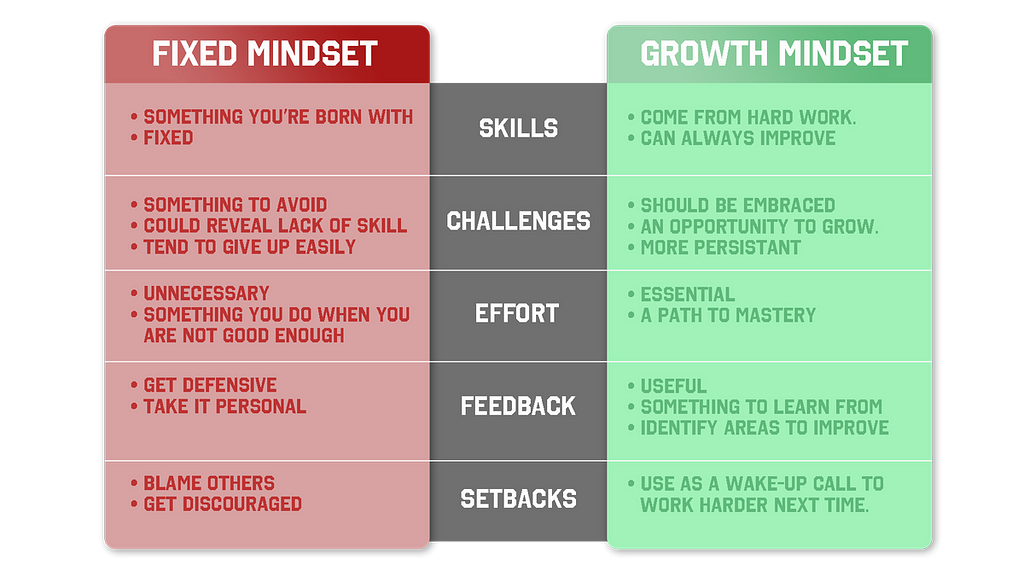
To me, this seems directly related to the fact that entrepreneurs operate in a more uncertain environment.
Some seek out the uncertain environment because they want to learn, and tolerate the uncertainty to enjoy the accelerated learning.
Some prefer the uncertain environment to other more controlled, predictable environments, and learning is the rent they pay to stay in it.
And for some, well, why not both?
In the best cases, this results in entrepreneurs learning and growing more than — if they manage to survive in a chaotic, uncertain environment, they begin to develop skills and abilities that they wouldn’t have otherwise. They learn to manage and inspire people. To set a course. They create meaningful, colourful experiences, that make the world a brighter, more colorful place.
There’s a staggering caveat, though. Having a growth mindset does not guarantee success. And growth only really feels good on retrospect — it’s uncomfortable, painful and exhausting all the way through.
After working night and day to make your vision reality, you wake up to find that things did not go as planned. Your company did not unfold like the Jack Dorsey keynote that you listened to when you started. Your product has issues that will be very hard to fix. The market isn’t quite where it was supposed to be. Your employees are losing confidence and some of them have quit. Some of the ones that quit were quite smart and have the remaining ones wondering if staying makes sense. You are running low on cash and your venture capitalist tells you that it will be difficult to raise money given the impending European catastrophe. You lose a competitive battle. You lose a loyal customer. You lose a great employee. The walls start closing in. Where did you go wrong? Why didn’t your company perform as envisioned? Are you good enough to do this? As your dreams turn into nightmares, you find yourself in The Struggle. — Ben Horowitz, Opsware
At CandyBar, we want to do everything we can to help small businesses achieve their goals and become successful. If you know anybody else we should be talking to, let us know!
"The struggle is real." - 8 things dozens of SMB entrepreneurs have in common was originally published in Bytes of Candy on Medium, where people are continuing the conversation by highlighting and responding to this story.
Originally published at https://bytes.referralcandy.com/the-struggle-is-real-8-things-dozens-of-smb-entrepreneurs-have-in-common-ed27c3cab454.