The following is a set of notes for an essay I want to write.
✱
A common feature in fantasy fiction is powerful magical objects. A crystal ball, a magic mirror, the Palantir in Lord of the Rings. These objects allow their users to see the unseen, to extend their sight and minds beyond the reaches of ordinary men. These objects often require intense training in order to use properly, or otherwise drive them mad.
“Any sufficiently advanced technology is indistinguishable from magic.” – Arthur C. Clarke
We all have such objects today. We call them smartphones. There are over 6,800,000,000 smartphones in the world, and I’m not sure if that statistic includes tablets and ipads.
“We pass thoughts around, from mind to mind, so compulsively and with such speed that the brains of mankind often appear, functionally, to be undergoing fusion.” – Lewis Thomas
✱
✱
re: phones making our lives worse (2024dec15 thread)
respectfully, this is true of all powerful magic in the hands of untrained/unskilled wielders. and we see a lot of discourse about the relative costs and benefits of all the magical devices and practices, but comparatively little about what it means to become more skilful
the more powerful magic you wield, the more important it becomes to cultivate the wisdom to wield it well
this is true of money, of charisma, of influence, apparently it’s even true of meditation
anything that has power- the ability to change things- has the ability to change things for the worse. every tool is simultaneously a weapon
“my phone is making my life worse” is a sentiment that abdicates acknowledgement of one’s own role in the situation. if we included it – “(my usage of) my phone is making my life worse” – that nudges us closer to questions like “well, how might i use it differently?”
also more broadly, “ is generally bad” can be true for a lot of things, and still it can be possible to ask, “well, when is it not bad? when is it good?” and determine “oh, it’s good under these conditions”, then ask “how do we attain those conditions?”, etc
✱
“If you stick a Babel fish in your ear you can instantly understand anything said to you in any form of language. […] Meanwhile, the poor Babel fish, by effectively removing all barriers to communication between different races and cultures, has caused more and bloodier wars than anything else in the history of creation.” – Douglas Adams
✱
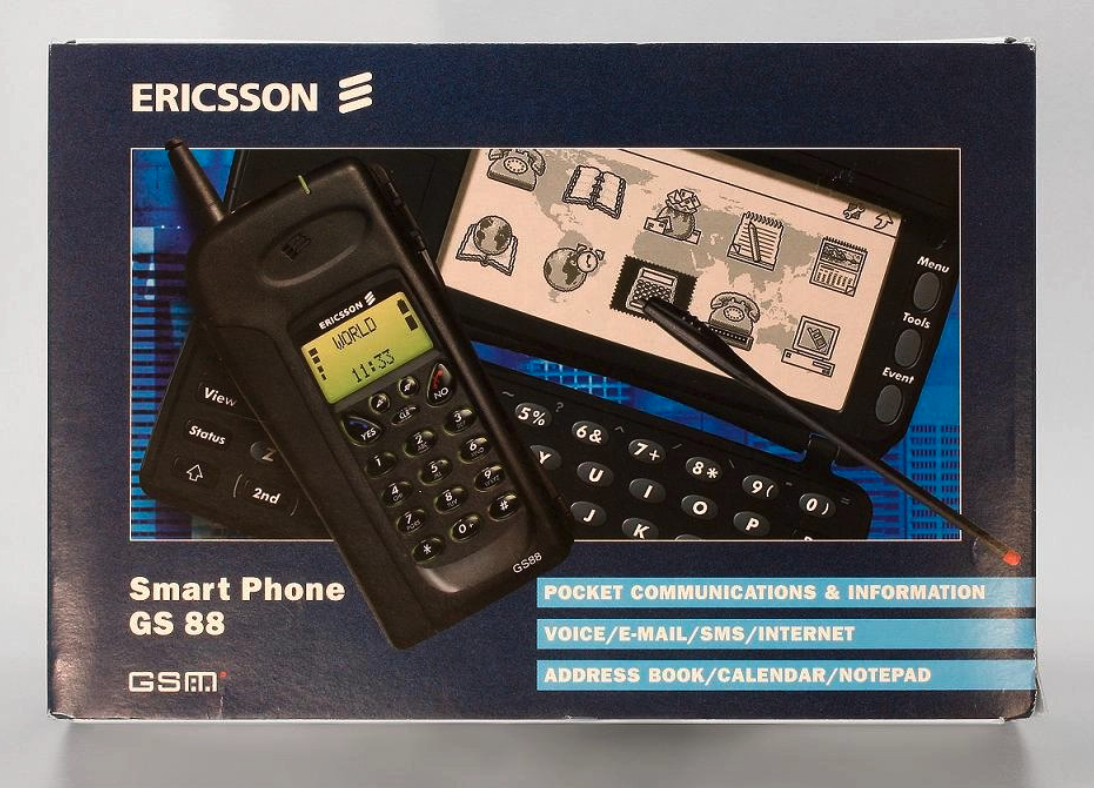
The term “smartphone” first appeared in 1997, when Ericsson described its GS 88 “Penelope” concept as a Smart Phone.
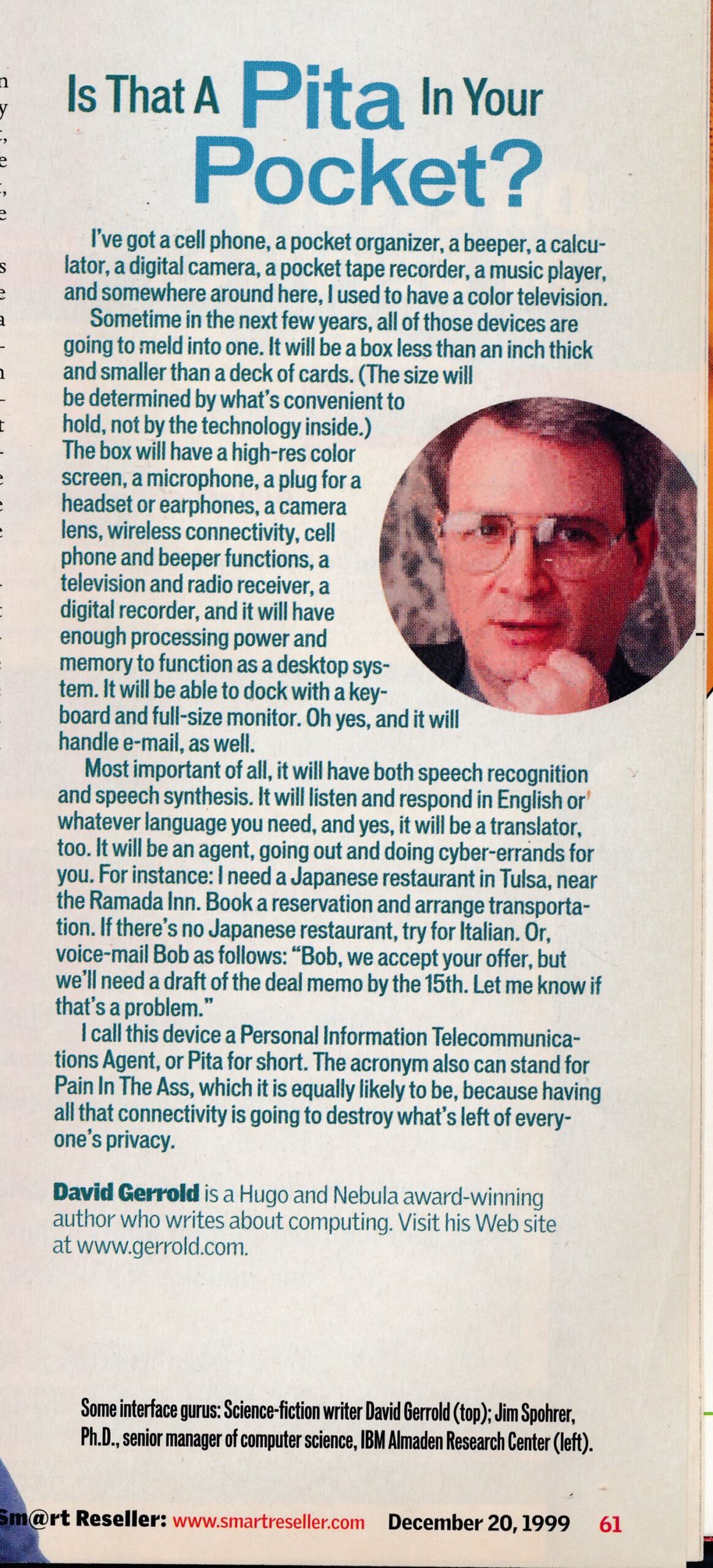
In 1999, scifi author David Gerrold predicted that eventually everyone would have pocket communicators.
In 2010, Taio Cruz released the video for “Dirty Picture”, which is interesting to watch in retrospect because it was after smartphones were released, but before they had become ubiquitous:
✱
“Real X has never been tried before” is a funny punchline, and there’s also a truth to it. Things don’t work until they do, and new technologies are often critical variables. A smartphone in everyone’s hands changes the landscape of possibility from 10-15 years ago.
✱
The world has changed so much since smartphones. I feel like we never really took a moment to collectively, properly talk about this. Somebody should make a good documentary or something. Maybe in time for the 15th anniversary of the iPhone?
The ability for everyday folks to record a video on their own, and upload it so that millions of other people can watch it within minutes, for effectively free, is something that has, in a sense, aggressively percolated through culture like some kind of memetic plague.
The underlying mechanisms are not shocking in retrospect; you can draw a curve from previous media tech innovations. MTV, radio, the printing press, etc..Historically, each new media tech innovation opened up a new front for a new class & scale of culture war.
OnlyFans couldn’t have happened without its predecessors (Snapchat, Instagram, Patreon) paving the way. And simultaneously in a sense it was inevitable, because if there is a demand, the technology will rise to meet it. And culture will have to adapt in response to it.
(One simplistic-but-interesting way of thinking about technology is, it’s a process that removes steps between people and their desires.)
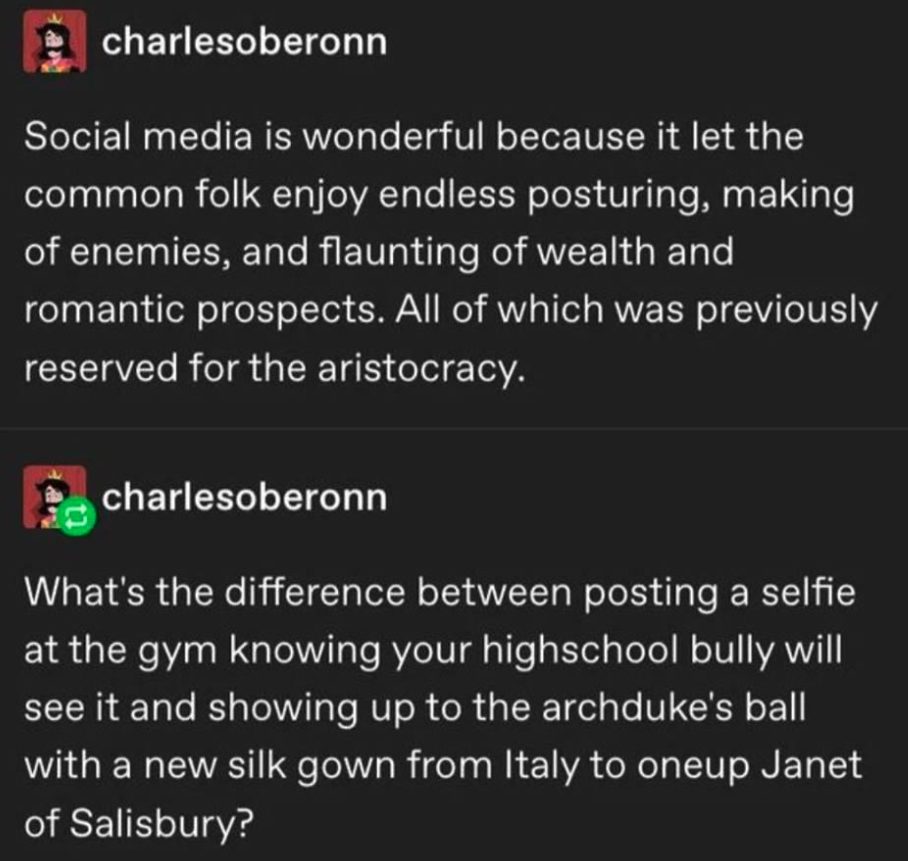
When I say “paving the way”, I don’t just mean technologically, but culturally. Culture takes some time to evolve. While Instagram was a media tech innovation in publishing photos to a feed, it‘s also an ongoing cultural innovation in how we relate to images of ourselves & each other. We are all media stars now. We are all voyeurs and exhibitionists to varying degrees.
✱
On status economies: Part of the big shakeup of the world since smartphones, Twitter, WhatsApp, YouTube, Clubhouse, etc is the ability for people in one status economy to directly observe the people in another, and to dunk on them for ingroup points, which kinda creates a Neo-Hobbesean “war of all against all”.
Historically, we weren’t really able to witness or listen in on the conversations of people from outside our social groups.
✱
Notes from my last military reservist in October 2020:
We take it for granted now but it’s remarkable that everyone here has smartphones and power banks and whatsapp, which has allowed us to become much more fluid re: information dissemination. We log our temperatures 2x daily via a web app.
Thinking also about how the protests around the world – Nigeria, Thailand – are facilitated by this. People can share information and coordinate on the fly, leadership can be fluid. Theorists did predict this, and/but it’s really something to witness first-hand.
For some reason it’s the power banks that are really gripping my imagination right now. Consumer battery tech, most of which I believe comes out of China, innocuously supporting uprisings and general upheaval around the world.
Even this right now- it’s 544am on a quiet morning in Singapore. ~5 years ago I would be twiddling my thumbs in boredom, but now I can share my thoughts instantaneously with friends all over the world. Feels transhuman.
In 2019, when I was in SF, my phone was running out of battery and my power bank had run out, so I tweeted asking if anybody could spare a charge, and someone actually responded.
✱
Re: Iranian clubhouse rooms: I don’t think tech folks in the US realize just how wack things like clubhouse and twitter spaces etc are for parts of the world where it is generally too difficult, costly, prohibitive for regular folks to organise town hall type events… for better and worse.
Honestly I think people still don’t realize how mad it is that we all have smartphones & that we can all do all sorts of things with them. Like yeah even with youtubers and ridesharing and food delivery and whatnot… all of that is just the early stages. We are in the early days.
We’ve basically given people almost direct read/write access to each other’s brains. But we are extremely limited by our dated intuitions, assumptions and so on. we are truly about 20-30 years behind what the tech allows us to do, constrained by imagination.
✱
It’s so easy to forget how much more critical the press was in a world before smartphone cameras and social media. It used to be possible to do things and have them covered up completely. Or it was easier, at least. Bringing a camera with you was a game changer.

Surely a lot of the news media industry’s frustration and anxiety in the post-smartphone era is that their cameras aren’t the only ones any more, and so they have to evolve from being the providers of rare and limited footage, perhaps to being the middlemen and intermediaries of a tremendous volume of footage. And even this seems like something that they’re unlikely to be able to do as well as a decentralized army of motivated volunteers.
✱
sometimes I’m surprised that I didn’t take much interest in photography and filmmaking for most of my life – I think until I got a smartphone (2013). I got my youtube account in 2005 but I only posted crappy videos of myself playing guitar to my webcam. or shots of my friends
✱
2014: Hilarious to see JC students with iPhones and graphing calculators. I think a Xiaomi smartphone is cheaper than a GC
✱
✱
Having a smartphone and an internet connection in 2018, in some ways, makes us wealthier than kings were in the past.
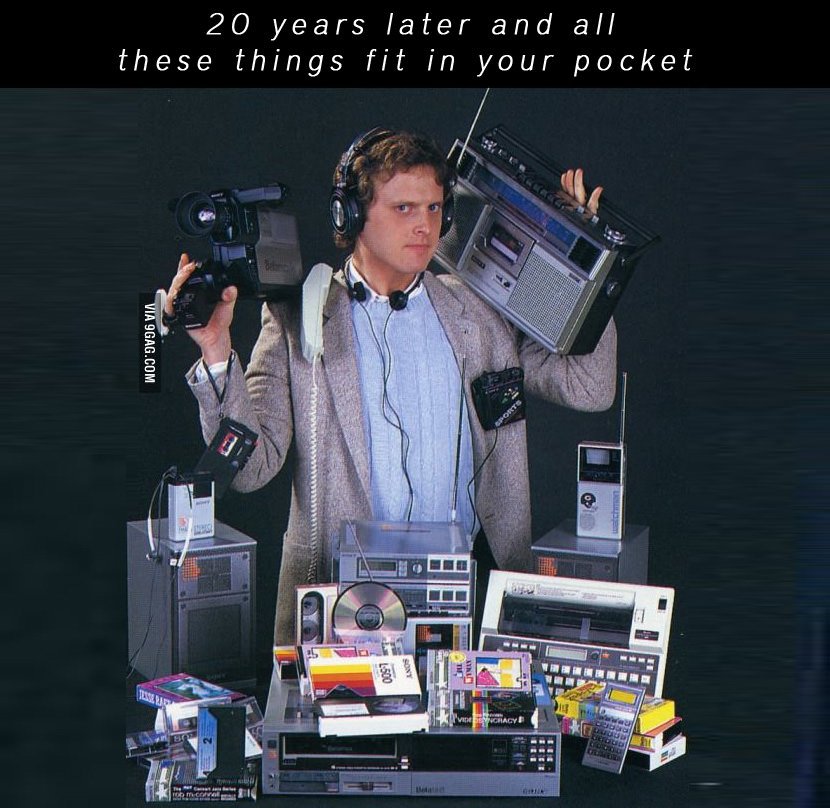
Google Maps before smartphones
✱
(2019, HN comment) Nathan Jurgenson wrote an interesting piece about how phones are a sort of microaggression- using it is a subtle act of protest against present company. It’s a kind of shield, a buffer that says “I’m afraid to fully commit.”
The beautiful thing about Burning Man (I’m guessing- I’ve never been there) is that it’s a self-selecting audience. And self-selecting audiences are the easiest to work with. Think about a comedian facing a tough crowd vs. a comedian facing a friendly, hometown group.
I’m pretty sure you’ll find the same sort of cameraderie anywhere that’s hard to get to. A mountain summit. A backpacker’s hostel. A track meet. Military boot camp. The distance between the self and the other is diminished, and everybody gets along beautifully- so there’s no need for phones.
I saw this video on Tumblr of gymnasts at the Olympics- Russian, Chinese, American- none of them speaking the same language- giving each other hugs and thumbs-ups. You probably wouldn’t see them on their phones much even if they had them with them- there’s too much to take in.
✱
ben evans 2015 dreadnoughts and iphones
sam kriss 2025 how to live without your phone
✱
Device
I have a powerful device in my hands, my iPhone. It’s holding over 50,000 photos in it, and it has access to the internet, where I have all my tweets and blogposts, and all my friends are on it. I can write anything I want, I can take photos of anything, I can record videos. I haven’t learned the more advanced video editing tools.
- vv dotcom statement with pics of everything
- Parking lot gigs / beyonce / apple
- Shiny lures
- Apocalypse test