xerox'd flowers
Frame Studies · Writing · 2026 · 2.7k words
Visa's archivist impulse, rooted in grief, has reorganized his life around documenting. He sees his notes as xerox'd flowers, static copies of living things, and now he wants to let ideas drive again.
xerox'd flowers ⚘
what is killed in the static representation of dynamic life?
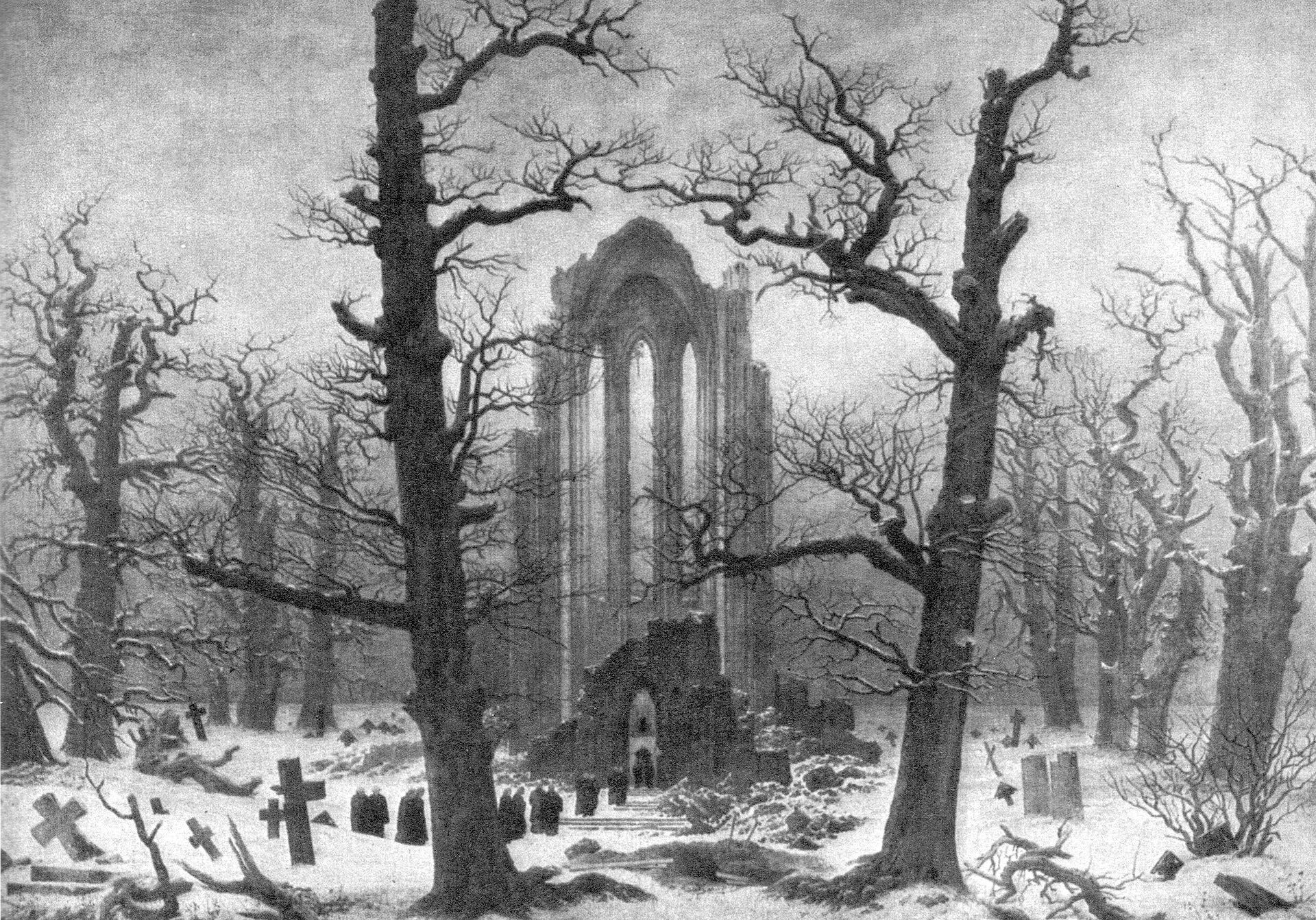
Sometime in 2024, when feeling like I had lost touch1 with my own capabilities as a creative, I put together a messy post on visakanv.com/archives/ titled ‘grieving lost media’– scattered thoughts about old blogs and journals that I’ve lost over the years. The output is incoherent, but going through the process helped me better understand how much of my archivist impulse to thread things together is rooted in grief and remembrance. My life’s work thus far has been largely a living memorial to all I have lost and forgotten2.
"My archivist impulse” makes it sound like a quirky little habit– like a tendency to absent-mindedly arrange objects neatly on one’s desk. But in my case this impulse percolates across the entire ecology of my being– you could say that my compulsion to save and record things reorganized my entire life from the inside out. Since I was about 13 years old, I started living my life with the intention of documenting it, and the living became almost secondary to the documenting. To get a little grandiose about it I might proclaim that this is what all authors do: we create a life for ourselves out of arranging and rearranging words. As Borges put it, “The work of a poet never ends. It has nothing to do with working hours. You are continuously receiving things from the external world. These must be transformed and eventually will be transformed. This revelation can appear anytime. A poet never rests. He’s always working even when he dreams.”
Everything serves the process. The process is everything.
I’ve had all kinds of feelings about this over the years. I’ve been thrilled about it, I’ve been depressed about it, I’ve been silly about it, I’ve been meh about it, I’ve been “ah well” about it, I’ve wanted to give it up, I’ve found myself crawling home to it. It’s messy and hard to summarize. To attempt to summarize it feels like a fool’s errand, and yet, as I said in the tavern and the temple (2023), I am a fool! So how then would I sum up my feelings? Is that not the whole point of ‘being a creative’, to find creative solutions to impossible puzzles? Prose begins to fail me and I have to abscond to poetry:
may the boisterous laughter of our children
sanctify the weary graves of our grandfathers
may the life that springs forth, all-dancing,
bring solace to our sour, stagnant souls
may our polluted hearts find redemption,
may we return at last to wholeness, to home.
It’s so easy to fall into the trap of documenting for documenting’s sake. But when I step back and really take it all in, I have to remind myself that the documentarian impulse was, again, rooted in grief and remembrance. It was always meant to serve life. Not supplant it. There’s a lot more I have to say about this but I’m going in circles and I need to pick up my kid from school, so let’s move on for now.
everything’s a copy of a copy of a copy…
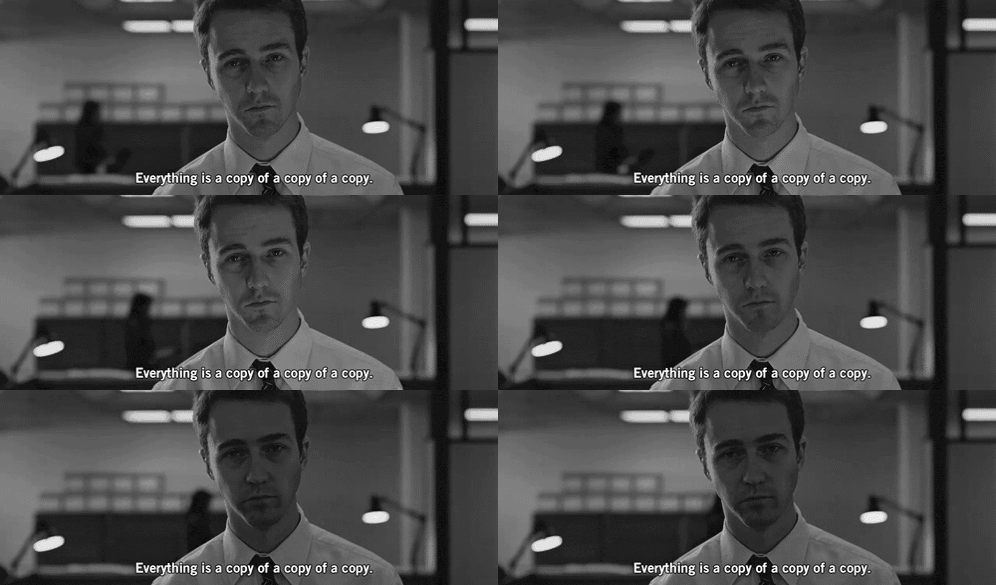
I once got nerdsniped into looking up everything I could find about xerox copiers. They’re an interesting and important part of media history, since it was the first time people could cheaply and easily make copies of anything near-instantly. Here are some quick details from a 2015 article by Clive Thompson:
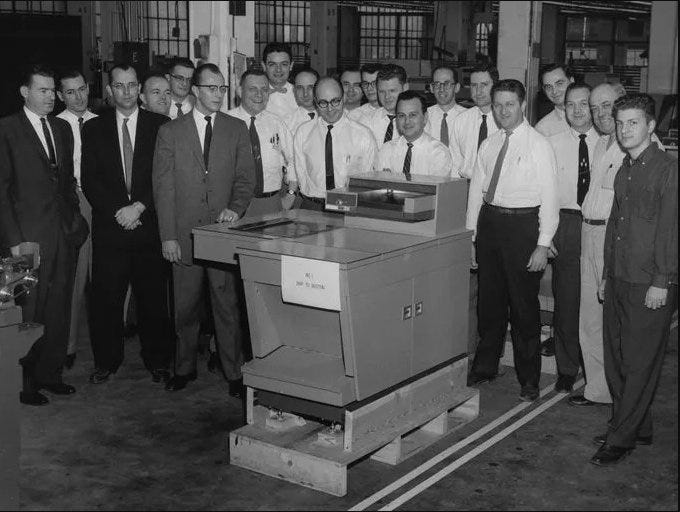
It took over 20 years of experimentation before Xerox released the 914, the ‘first easy-to-use photocopier’. It took 7 seconds to make a copy. It was the size of a desk, weighed ~650lbs/300kg, and some offices had to remove doors to install the giant machines.
Xerox expected customers would make about 2,000 copies/month, but they easily made 10,000/month, and some as many as 100,000/month. Before the 914 machine, Americans made 20,000,000 copies a year. By 1966, Xerox had 700x’d it to 14 billion/year.
“The button waiting to be pushed, the whir of action, the neat reproduction dropping into the tray—all this adds up to a heady experience, and the neophyte operator of a copier feels an impulse to copy all the papers in his pockets,” wrote John Brooks in a 1967 New Yorker article.
Police would use the photocopier to capture a snapshot of a perp’s pockets when jailing him, to save themselves the trouble of describing the physical contents
“For everyday people, replicating nonsense was the best part of the copier– an illicit thrill. Hiding behind the anonymity of a duplicated document, office workers began circulating off-color jokes and cartoons.”
“Artists, too, flocked to the device, thrilled by the high-contrast, low-fi prints it produced—so unlike either photography or traditional printing. As they showed, photocopying had an aesthetic. “When I show it a hair curler it hands me back a space ship, and when I show it the inside of a straw hat it describes the eerie joys of a descent into a volcano,” said Pati Hill, an artist who became famous for using a photocopier.”
I was fascinated to learn about Pati Hill3, so I looked up her work… which led me to this stunning image:
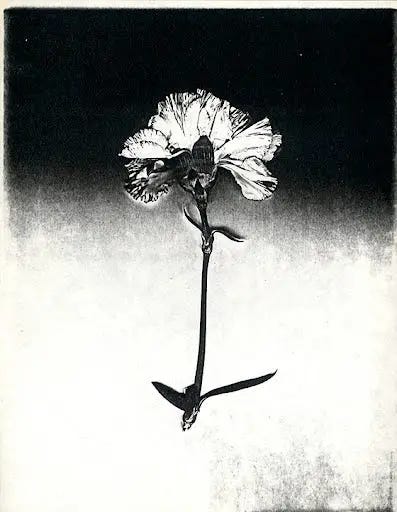
Why do I find it so compelling? I’ve surely seen thousands of photographs of flowers over the years, and I hardly ever stop to examine them or think about them much. Photographs tend to serve us the illusion that we’re directly looking at the thing being photographed. I suppose this is especially the case when we’re looking at photographs online– I imagine it would be quite a bit different if say, someone had a box full of printed photographs of flowers. Even so, I’d imagine that the typical flower in a photograph remains untouched.
Pati Hill’s carnation, on the other hand, was clearly removed from its environment, which meant that it surely died an unnatural death, as part of the artistic process. Of course, all flowers die eventually, and yet there’s something slightly ominous about this, about killing it on purpose. The stark black-and-white of the image erases some of the subtlety of the flower. It feels cold and clinical, like an x-ray. And yet you can discern, you can infer some of the tenderness of the carnation, feel the contrast of its soft petals pressed against the harsh glass of the copier. Stare at it long enough and you glimpse eros and death.
I’ve kept this image with me, in a twitter thread and in my mind, for almost 2 years now, and still i feel it calling to me, asking for something to be made of it, made with it. And I found myself thinking… all of my old notes, my clippings, my drafts… they are all, in some metaphorical sense, xerox’d flowers.4 I’ll get to this again at the end of this post. But first, a little more about Pati Hill:
Pati: “Making copies is very near to speaking.”
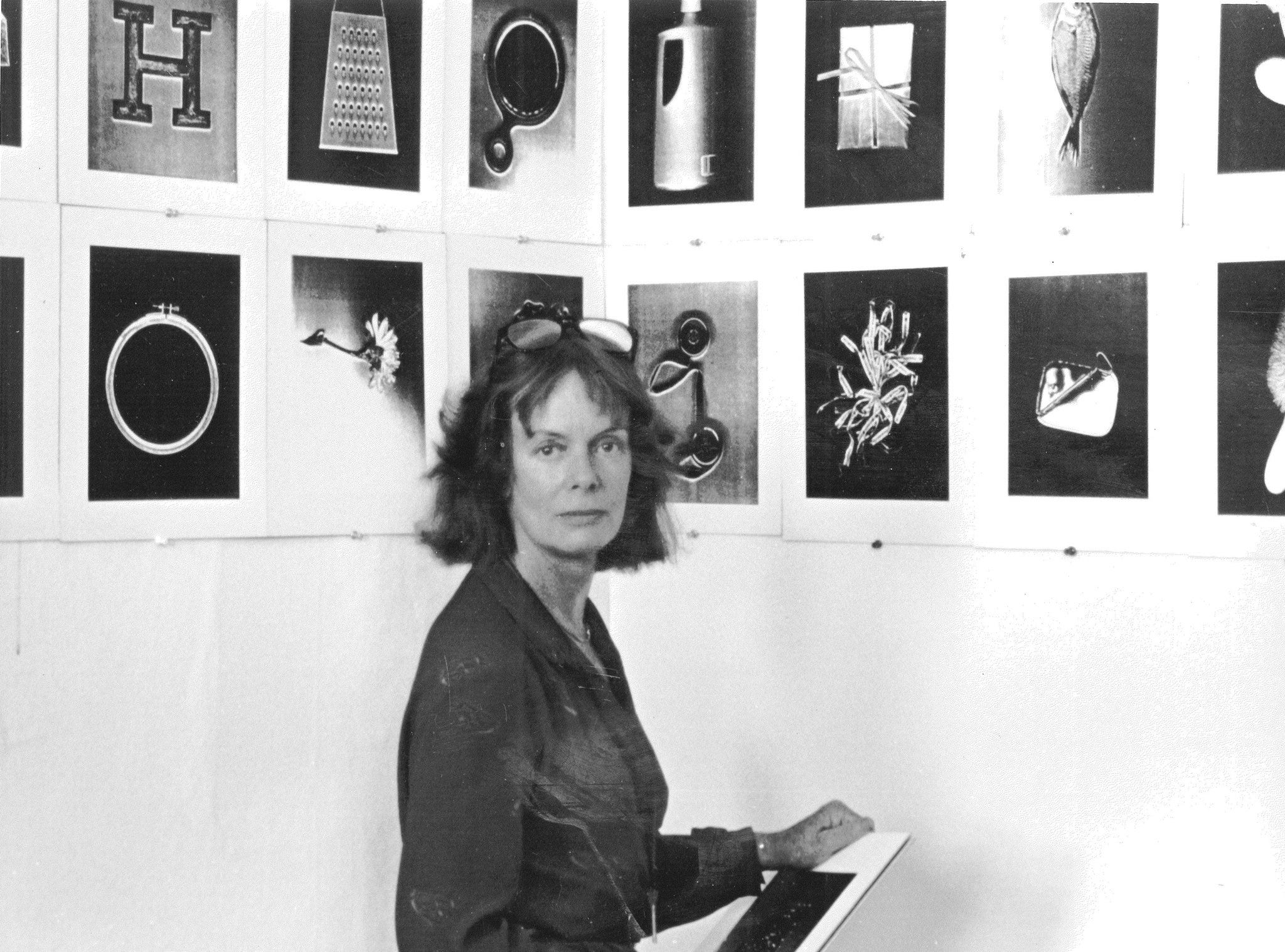
There’s a 1980 New Yorker article about her titled “Copies”, by Anthony Bailey. Some quick quotes and notes:
“Other artists, too, are currently working with copying machines, fascinated by a process that can take an utterly ordinary thing and dissociate it from the context in which we normally see it, thereby making it particular and sometimes magical again—an effect, it seems, of the shallow yet dramatic depth perception of photocopiers, which give the copied object the effect of floating in space.”
Pati Hill sat next to Charles Eames on a flight from Paris to New York, and she showed him some of her work, and he formally introduced her to IBM, which gave her a grant and let her a machine for 2.5 years!
Pati: “A copier works like a magnet, attracting or rejecting things. It separates things, gives them an edge. On the grays, it’s always making up its mind which way it will go, toward black or toward white. A photocopy seems to me much more truthful to detail than a photograph. On a copier, the actualities of something become quite marvelous. Everything is symbolic.”
Pati: “Photocopiers enable every person in every office to be an artist-though I know that when I say that sort of thing it troubles I.B.M. and Xerox. They can visualize all the problems that will result from art and experiment—the burnups and paper jams, and copier repairmen submitting huge bills. I think it’s wonderful that there are copy places like laundromats, where artists can go and use the machines for not much money. Copiers bring artists and writers together. Copies are an international visual language, which talks to people in Los Angeles and people in Prague the same way. Making copies is very near to speaking.”
“Is the idea in the car with us right now?”
I find myself thinking again about a Dave Chappelle bit that I quote often, about letting the idea drive. When my work does well, it’s usually because the idea was driving. But then I get cocky, or arrogant, and think, “I was there. I was involved. That was successful. I should drive this time.” And it doesn’t work, because there’s no idea in the car. With bigger works, this gets more complex, because it inevitably becomes a complicated, reflexive interplay between the author and the idea. But there has to be some idea in the car, and it should have a clear voice. And when I look back at these past couple of years, I feel like I haven’t let the ideas drive enough. I want to try and make this more precise: when I say “some idea in the car”, I mean something alive, something that’s vivid and pulsing in some way.
What I tend to have a lot of instead are a lot of xerox’d flowers. By this I mean… thousands and thousands of static snapshots of dynamic processes. How does that feel? It doesn’t feel simply good or bad. I find myself feeling… sheepish. I’m sorta grateful to my past self for assembling so many xerox’d flowers– it was meaningful in a way. He was trying to get me to see something. And yet, the way I went about that project was itself suboptimal, and the project itself is ultimately kind of futile, or misplaced. He was killing himself to get me to see something. If I could have done everything better in the most fundamental sense, I wouldn’t have needed any xerox’d flowers at all. What I really wanted, all along, was to live, and to be alive. And it’s shocking how much within me had to die before I really saw it.
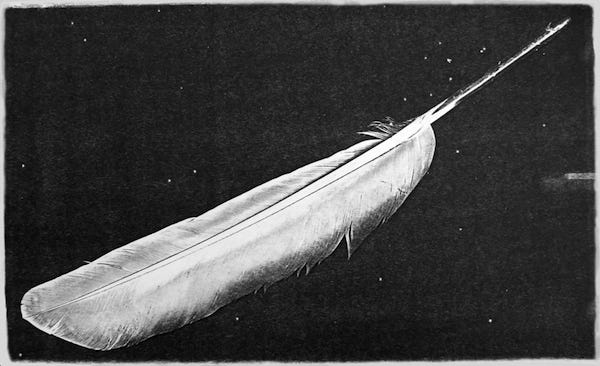
atrophy, losing touch, a decay of knowing (2025jun30) – I feel like I used to have a more intimate, intuitive, at-my-fingertips understanding of how freestyling writing works, but I haven’t been doing it much in recent years, so my understanding has atrophied somewhat. That itself is something I’ve been meaning to talk about: how do understandings atrophy, or decay, or diminish? It’s a kind of forgetting, a kind of “losing touch”, a dimming of fluency.
I’ve encountered this atrophy a lot in my on-again, off-again guitar practice over the years. There are some things that seeped deep into my ‘muscle memory’, which I can play without thinking about what I’m playing. There are some things that have withered, and I’ll have to think it through, or look it up– and I typically pick those bits back up faster than the first time I learned them. And then there are some things that never quite ‘clicked’, and every attempt to relearn them feels like I’m struggling with it for the first time. There are some songs that I could play at one point, that somehow have left my fingers completely. And I’m not sure I could confidently tell you in advance which songs, riffs and patterns that I’ve learned will stick, and which won’t. And this is also the case with all other forms of remembering and forgetting. I could make a list of ideas of things I’d like to write about (I’ve done this many times over the years), and then I could compare the lists to each other (I haven’t done this in a while), and I’ll invariably find that some ideas persist, some ideas decay, some seem to me like good ideas, some seem to me like bad ideas… and none of these seem to actually be strong indicators for whether or not an idea is actually good.
It seems like it’s been so important to me to honor the volume of work I’ve done, for multiple reasons. There are layers to it. And not all of those reasons are... honorable? Some of it is small-minded whinging. “I’ve done so much that nobody will ever know or care about!” Some of it is a desperation to be appreciated, even though I know that what most people tend to appreciate is not necessarily the amount of grunting and straining that somebody did, but really the quality of the outcome... but do I care about most people though? It’s messy. I don’t want to be seeking the vague imagined approval of a vague imagined consensus of vague imagined people… and I especially don’t want to impress the shine-seekers who are fundamentally impatient and intolerant. I think a part of why I’ve taken such a long time with my work is that I’m looking to see who the patient readers are. But how do I know that’s not self-serving bullshit? The only way is to keep publishing, probably.
I also don’t think it’s necessarily good for me to seek out the specific weirdos in the world who are obsessive in the same way I am, because then we’d risk becoming enablers for each other’s self-valorizing bullshit. “I appreciate you so much,” we’d tell each other as we each go on blundering artlessly in our own lives. What feels obvious now that I’ve written this out is that I should be seeking complementary weirdos, people who are good at the things I’m bad at, see things I don’t see, think thoughts I don’t think, and feel what I don’t feel.
I found an interesting pdf about the life of pati hill: https://www.arcadia.edu/wp-content/uploads/2022/03/Pati_Hill_Timeline_final.pdf
Something shifted for me when i wrote the tao of poasting (2025)– the phrase “sketchbook performance art” was particularly resonant. What do I mean by sketchbook performance art exactly? “Performance art” is a way of doing something in public that’s meant to be seen and appreciated. I sometimes I think of my twitter as performance art, a demonstration of how someone can move in the world, move online, in a way that’s nerdy and pro-social. Some of the most important elements are things like, how I respond (or not respond!) to belligerents, how I encourage other people, etc. The way of tweeting is more important than the tweets themselves.
I don’t exactly wake up every day and think “time to start today’s performance”– the meta of that is something I maybe stop to think about every few months or so. In each moment, my task is to be fully present, fully myself. I’ve sometimes said, if I had to be caricatured into a simple idea, I’d like to be caricatured as an ‘internet street busker’. Twitter is a great medium for that– you’re walking past me on the street as you scroll the timeline. Substack is a little bit more complicated in my view, at least in the way that I’m conceptualizing it. It’s less about random acts of busking– ideas to be considered– and more about creating spaces that people can inhabit.
Originally published at https://visakanv.substack.com/p/xeroxd-flowers.